

You need a permit to remodel a kitchen when the work touches electrical wiring, plumbing lines, gas lines, HVAC, or anything structural, such as removing a wall. Cosmetic updates do not: painting, new countertops, cabinet replacement in the same layout, flooring, backsplash tile, and appliance swaps that use existing hookups are all permit-free in Dallas and most DFW cities. For projects that do need one, the City of Dallas issues a building permit for the overall remodel, and licensed tradespeople pull separate electrical, plumbing, and mechanical permits. Budget roughly $150 to $1,000 in total permit fees and one to two weeks for approval on a typical kitchen. Skipping a required permit can hold up a future sale, complicate insurance claims, and force you to open finished walls for a late inspection.
The Quick Test: What Triggers a Kitchen Permit
The simplest way to think about it: if the work changes what is behind the drywall or under the slab, you need a permit. If it only changes what you can see and touch, you usually do not. A countertop swap from laminate to quartz is permit-free. Moving the sink two feet to fit a bigger island is not, because the drain and supply lines move with it.
| Kitchen Project | Permit Needed in Dallas? | Permit Type |
|---|---|---|
| Painting walls or cabinets | No | None |
| New countertops | No | None |
| Replacing cabinets in the same layout | No | None |
| New flooring | No | None |
| Backsplash tile | No | None |
| Appliance swap using existing hookups | No | None |
| New or relocated outlets and circuits | Yes | Electrical |
| Moving the sink or dishwasher drain | Yes | Plumbing |
| New or extended gas line for a range | Yes | Plumbing (gas) |
| Removing or altering a wall | Yes | Building |
| Moving or adding ductwork or vents | Yes | Mechanical |
| Adding an island with power | Yes | Electrical |
| Relocating the kitchen to another room | Yes | Building plus all trades |
Two items on that list surprise people. The first is the island. An island needs at least one receptacle under the electrical code Dallas enforces, and running that circuit under a concrete slab means an electrical permit. The second is wall removal for an open concept kitchen. Even a wall that turns out to be non-load-bearing needs a permit before it comes down, because the city wants an inspector to confirm what the wall was carrying, not your best guess.
How Kitchen Permits Work in the City of Dallas
Dallas structures residential remodel permits in two layers. The building permit, sometimes called the master permit, covers the overall project: demolition, framing, structural changes, and general construction. Then each trade pulls its own permit under that umbrella. Your electrician pulls the electrical permit, your plumber pulls the plumbing permit, and your HVAC contractor pulls the mechanical permit. In Texas, electricians and HVAC contractors are licensed through the Texas Department of Licensing and Regulation, and plumbers through the state plumbing board, so the person pulling each trade permit has to hold the matching state license.
There is one exception worth knowing. Dallas allows a homeowner’s permit for trade work you do yourself, but only if you own the home, live in it, and have filed a homestead exemption on it. That rule exists to stop unlicensed contractors from using homeowners as a workaround. If you are hiring the work out, the licensed trade pulls the permit, full stop. A contractor who asks you to pull the permit for their work is waving a red flag, something we cover in detail in our guide on how to choose a remodeling contractor in DFW.
Dallas currently enforces the 2021 International Residential Code, the 2021 plumbing and mechanical codes, and the 2020 National Electrical Code, all with local amendments. You do not need to memorize any of that. What matters is that your contractor builds to it, because the inspector will check against it. Applications go through the city’s online permitting portal run by Dallas Development Services, and simple interior remodels are often reviewed without a full plan submittal if no structural work is involved.
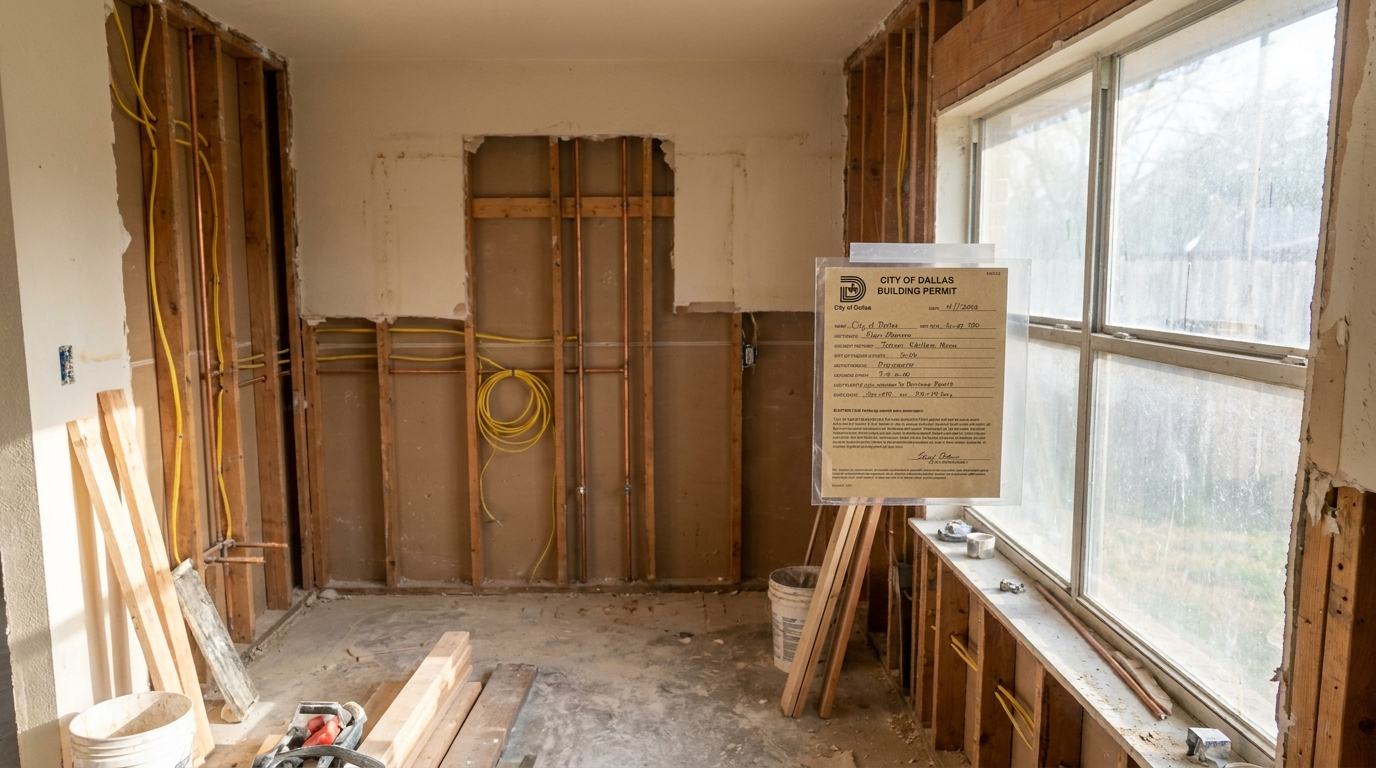
What Kitchen Remodel Permits Cost in Dallas in 2026
Permit fees in Dallas are calculated from the declared value of the work, so a $25,000 kitchen and a $90,000 kitchen pay different amounts. The figures below reflect what typical kitchen remodels have been paying. Fee schedules change, so treat these as planning numbers and confirm current fees with the city when you apply.
| Permit | Typical 2026 Cost | Notes |
|---|---|---|
| Building permit (remodel) | $154 to $618 | Based on project valuation |
| Electrical permit | $100 to $250 | Pulled by licensed electrician |
| Plumbing permit | $100 to $250 | Includes gas line work |
| Mechanical permit | $75 to $200 | Only if ducts or vents change |
| Typical combined total | $500 to $1,000 | Full kitchen with all trades |
| Plan review time | 1 to 2 weeks | Longer if structural drawings needed |
On a mid-range Dallas kitchen, which we break down in our Dallas kitchen remodel cost guide, permits usually land around one to two percent of the project budget. That is cheap insurance compared to what unpermitted work can cost you later, which we will get to below.
The Permit and Inspection Process, Step by Step
- Finalize the scope. The permit application describes the work, so decisions about moving plumbing, adding circuits, or removing walls need to be made first.
- Prepare drawings if needed. Cosmetic-plus remodels rarely need stamped plans. Wall removal or anything structural usually does, sometimes with an engineer’s letter.
- Apply through the Dallas online portal. Your contractor typically files this and lists their trade subs.
- Plan review. Simple kitchen remodels clear in one to two weeks. Structural scopes take longer.
- Permit issued. The card gets posted at the house and work can begin.
- Rough-in inspections. Electrical, plumbing, and mechanical get inspected while the walls are open. Nothing gets covered with drywall until these pass.
- Insulation inspection, if exterior walls were opened.
- Final inspections. Each trade closes out, then the building final closes the permit.
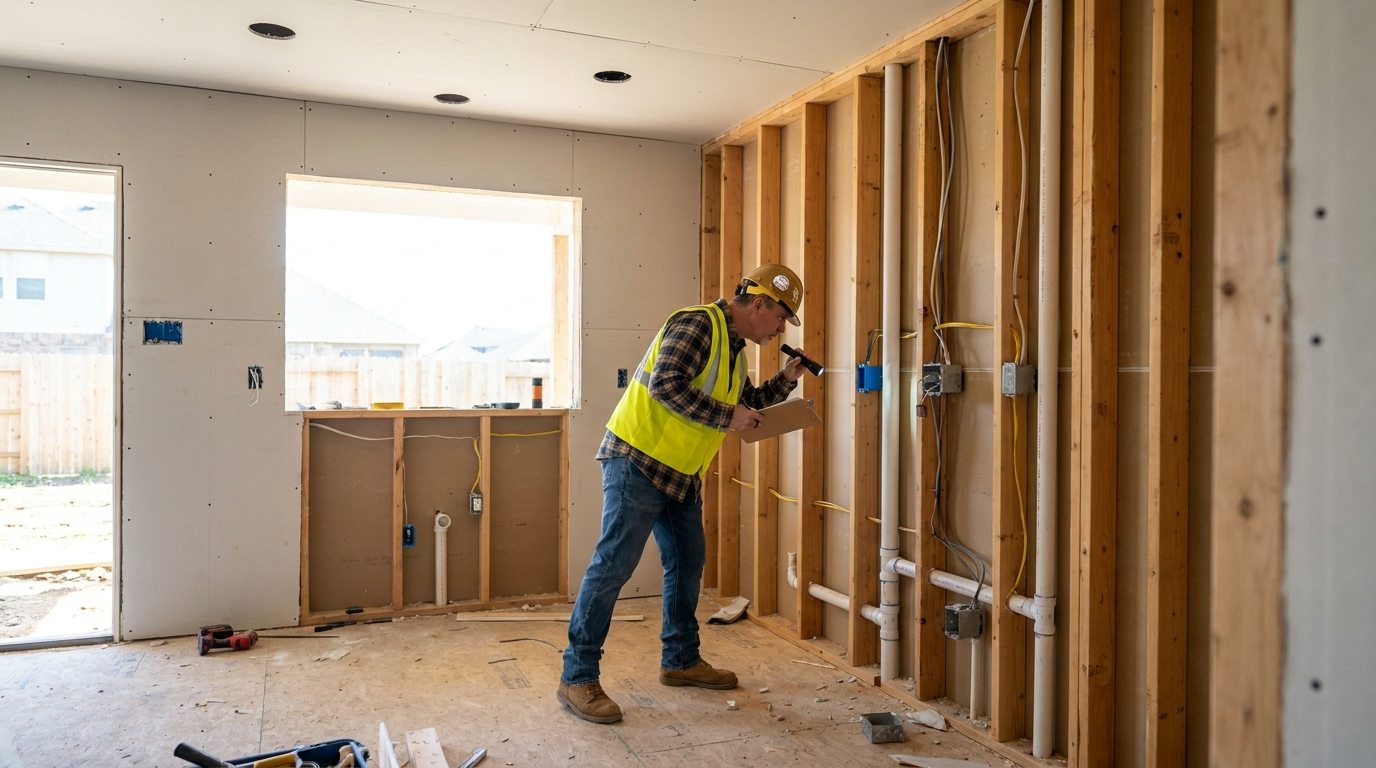
The rough-in inspection is the one that matters most for your protection. It is the only time a third party looks at the wiring and plumbing before they disappear behind drywall for the next thirty years. In older Dallas neighborhoods like Lakewood and the M Streets, this is often where inspectors catch aluminum branch wiring from the late 1960s and 70s or an aging Federal Pacific panel that should be replaced while the walls are already open. Finding that during a remodel is annoying. Finding it during a house fire investigation is far worse.
Permit Rules in Plano, Frisco, and Other DFW Suburbs
Every DFW city follows the same basic logic: cosmetic work is free of permits, trade and structural work is not. What changes from city to city is the portal, the fee schedule, and how fast reviews move. Suburban permit offices are often quicker than Dallas for small residential remodels.
| City | Kitchen Permit Required For | Local Notes |
|---|---|---|
| Dallas | Electrical, plumbing, gas, HVAC, structural | Homeowner permits require homestead exemption |
| Plano | Same categories | Fast online portal; see our Plano kitchen cost guide |
| Frisco | Same categories | Newer housing stock, fewer surprises; see Frisco kitchen costs |
| McKinney | Same categories | Historic district homes may need extra review |
| Allen | Same categories | HOA approval may run in parallel |
| Arlington | Same categories | Standard trade permit structure |
| Fort Worth | Same categories | Separate portal and fee schedule from Dallas |
One practical note for Collin County homeowners: in Plano, Frisco, McKinney, and Allen, most houses sit on post-tension slabs. Moving a sink or an island drain on a post-tension slab means locating the tension cables before anyone cuts concrete. Permitted work forces that step. Unpermitted work sometimes skips it, and a cut cable is a five-figure repair.
What Happens If You Skip the Permit
Plenty of kitchen work in Dallas gets done without permits. Here is what that actually costs when it catches up with you.
At resale. The Texas seller’s disclosure asks directly whether work was done without required permits. Answer yes and buyers negotiate the price down or walk. Answer no falsely and you carry legal exposure after closing. Buyer inspectors also flag obvious unpermitted work, like a moved gas line with no permit history on file. If you are weighing a remodel against selling, our remodel vs. move comparison covers how permit history affects both paths.
With insurance. If a fire starts at an unpermitted circuit or a leak starts at an unpermitted drain, the claim gets harder. Insurers do not automatically deny everything, but unpermitted trade work gives an adjuster a reason to dig, and that is not a position you want to argue from with a flooded kitchen.
With the city. If Dallas discovers active unpermitted work, you get a stop work order and pay an investigation fee on top of the regular permit cost. Work already covered by drywall may need to be opened for inspection. That means tearing out finished walls you just paid for.
On appraisal. Unpermitted improvements often get little or no credit from appraisers, which matters if you refinance or if a future buyer’s lender questions the square footage or the layout. Permitted work holds its value, a point we also make in our post on whether home additions increase property value in Dallas.
Do Permits Slow Down a Kitchen Remodel?
Less than most homeowners expect. The permit application adds one to two weeks before demolition, and smart contractors file while cabinets are on order, so the wait overlaps with lead times you were already absorbing. Inspections during the project add a day or two each, mostly scheduling. On a typical six to twelve week kitchen remodel, permits move the finish date by days, not months. The projects that lose real time to permitting are the ones with structural changes and no drawings ready, which is a planning failure, not a permitting one.
Who Handles the Permit: You or Your Contractor?
Your contractor. A remodeling company doing this work every week knows the Dallas portal, the fee schedule, and the inspectors. At ALC Construction Pros, permit filing and inspection scheduling are part of every kitchen remodeling project we run, and the licensed electricians and plumbers on our jobs pull their own trade permits, as the law requires. The permit cost shows up as a line item in the bid, not a surprise.
The reverse arrangement should worry you. When a contractor asks the homeowner to pull an owner’s permit for work the contractor is performing, it usually means the contractor cannot pull it themselves, either because they are not licensed or because they have a history with the city. Texas has no statewide general contractor license, so the permit trail is one of the few paper records that proves who did what on your house. Keep it clean.

Frequently Asked Questions
Do you need a permit to replace kitchen cabinets?
No, as long as the cabinets go back in the same layout and no wiring or plumbing moves. If the new design relocates outlets or the sink, those trades need permits even though the cabinets themselves do not.
Do you need a permit to replace countertops?
No. Countertop replacement is cosmetic in every DFW city. If the new top requires moving the sink or cooktop connections, the plumbing or electrical portion needs a permit, not the countertop itself.
Do I need a permit to move my kitchen sink?
Yes. Moving a sink relocates drain and supply lines, which is permitted plumbing work in Dallas. On slab foundations this usually involves cutting concrete, which makes the inspection even more valuable.
Do I need a permit to replace a dishwasher or refrigerator?
No, if the new appliance uses the existing connections. A first-time dishwasher installation that needs a new drain connection and a new circuit requires plumbing and electrical permits.
Do I need a permit for new kitchen flooring?
No. Tile, luxury vinyl plank, and hardwood are all finish materials. No Dallas-area city permits flooring in an existing kitchen.
Do I need a permit to remove a wall between the kitchen and living room?
Yes, always. Load-bearing walls need engineered beam sizing, and even non-load-bearing walls need a permit so the city can verify what the wall carried and what ran inside it. Most kitchen walls hide wiring at minimum.
Can I pull my own permit in Dallas?
Only under the homeowner’s permit rules: you must own the home, live in it, and have a homestead exemption filed. It covers work you personally perform. You cannot pull an owner’s permit to cover a contractor’s work.
How much does a kitchen remodel permit cost in Dallas?
Building permits for kitchen remodels typically run $154 to $618 depending on project valuation, and combined totals with electrical, plumbing, and mechanical permits usually land between $500 and $1,000 in 2026.
How long does it take to get a kitchen permit in Dallas?
One to two weeks for a standard remodel without structural changes. Projects with wall removal or engineered drawings can take longer in plan review. Suburbs are often faster for small residential scopes.
What happens if I remodel my kitchen without a permit?
If caught during work, expect a stop work order and an investigation fee on top of double the normal permit cost. After the fact, unpermitted work surfaces at resale through the Texas seller’s disclosure, and inspectors may require walls opened to verify the work.
Can you sell a house in Texas with unpermitted kitchen work?
Yes, but you must disclose it on the seller’s disclosure notice. Buyers commonly respond by negotiating the price down, asking for retroactive permits, or walking away. Retroactive permitting is possible in Dallas but often requires opening walls.
Does pulling a permit raise my property taxes?
Not directly. Appraisal districts in Texas value your home based on market data, not permit filings, though a major remodel can eventually show up in your appraised value whether or not it was permitted. The permit itself is not a tax trigger.
Who schedules the inspections?
Whoever pulled the permit. On contractor-run projects, the general contractor schedules the building inspections and each trade schedules its own. Homeowners on an owner’s permit schedule through the same city portal.
What building code does Dallas use for kitchen remodels?
Dallas enforces the 2021 International Residential Code, 2021 plumbing and mechanical codes, and the 2020 National Electrical Code, each with local amendments. Your contractor and their trades are responsible for building to these codes.
Do I need a permit to add a kitchen island?
A freestanding island with no utilities needs no permit. An island with a receptacle, a sink, or a cooktop needs electrical or plumbing permits, and on slab homes that means saw-cutting the floor to run the lines.
Do I need a permit to switch from electric to gas cooking?
Yes. Running or extending a gas line requires a plumbing permit and a pressure test at inspection. Going the other direction, gas to induction, typically needs an electrical permit for the new 240-volt circuit.
Do I need a permit for recessed lighting or under-cabinet lights?
New recessed cans and hardwired under-cabinet lighting involve new wiring, so yes, an electrical permit. Plug-in under-cabinet strips need nothing.
Do I need a permit to move the kitchen to a different room?
Yes, and it is one of the heavier residential permits. Relocating a kitchen moves plumbing, gas, electrical, and ventilation all at once, and the city will review it as a significant remodel. It is the same permit territory as a garage conversion or small addition.
Are permit rules the same in Plano, Frisco, and McKinney as in Dallas?
The categories are the same everywhere: trade and structural work needs permits, cosmetic work does not. Each city runs its own portal, fees, and review times, and historic districts like downtown McKinney can add a layer of review.
How do I check the permit history on my house?
Search your address in the City of Dallas online permitting portal, or ask the permit office directly. Suburban cities offer the same lookup. Checking before you buy or remodel tells you whether past kitchen or bath work was ever inspected.
Planning a Kitchen Remodel? Get the Permits Handled for You
Permits are one of those things that feel like friction until the day they save you. The cleanest way to handle them is to hire a remodeler who treats them as routine. ALC Construction Pros has been remodeling kitchens across Dallas-Fort Worth since 2014, and permit filing, licensed trade work, and inspection scheduling are built into every job, whether it is a cabinet-and-counter refresh or a full wall-removal remodel. Take a look at our completed projects, read up on what kitchens cost in Dallas, and when you are ready, request a free estimate. We will tell you exactly which permits your project needs before any work starts.




