

For most Dallas-Fort Worth homeowners in 2026, remodeling costs less than moving once you add up agent commissions, closing costs, and the jump from a 3 percent mortgage to today’s 6 percent-plus rate. Move when the problem is the location, the lot, or the school district. Remodel when the house itself is the only thing holding you back.
Remodel vs. Move: The Cost Comparison
Cost to remodel: $15,000 to $250,000
A targeted project fixes the specific problem, from a $15,000 to $30,000 bathroom or a $30,000 to $75,000 kitchen to a $60,000 to $110,000 room addition or a $100,000 to $250,000 whole-home renovation.Cost to move: $50,000 to $78,000 in fees alone
Selling and buying a $415,000 home loses roughly $50,000 to $78,000 to agent commissions, closing costs on both ends, and movers before you gain a single square foot.The mortgage rate penalty: $1,000-plus per month
Trading a sub-3 percent loan for today’s 6.25 percent rate can add well over $1,000 to the monthly payment, which often tips the math toward staying and remodeling.
What Affects the Remodel vs. Move Decision?
The house or the location: Construction can fix a dated kitchen, a cramped bath, or too few bedrooms, but it cannot change your commute, your school district, or your lot size.
Your current mortgage rate: Homeowners holding a rate well below today’s 6 percent-plus protect real money every month by keeping their loan and remodeling rather than moving.
Your street’s price ceiling: If a remodel would push the home well above what comparable houses on the block sell for, moving to a higher-tier area may protect your money better.
How long you plan to stay: Five years or more rewards a remodel in both daily use and resale, while a likely move within a year or two argues against a major renovation.
The final call between remodeling and moving in Dallas-Fort Worth depends on whether the house or the location is the real problem, your current mortgage rate, whether your lot and street can support the changes you want, and how long you plan to stay.
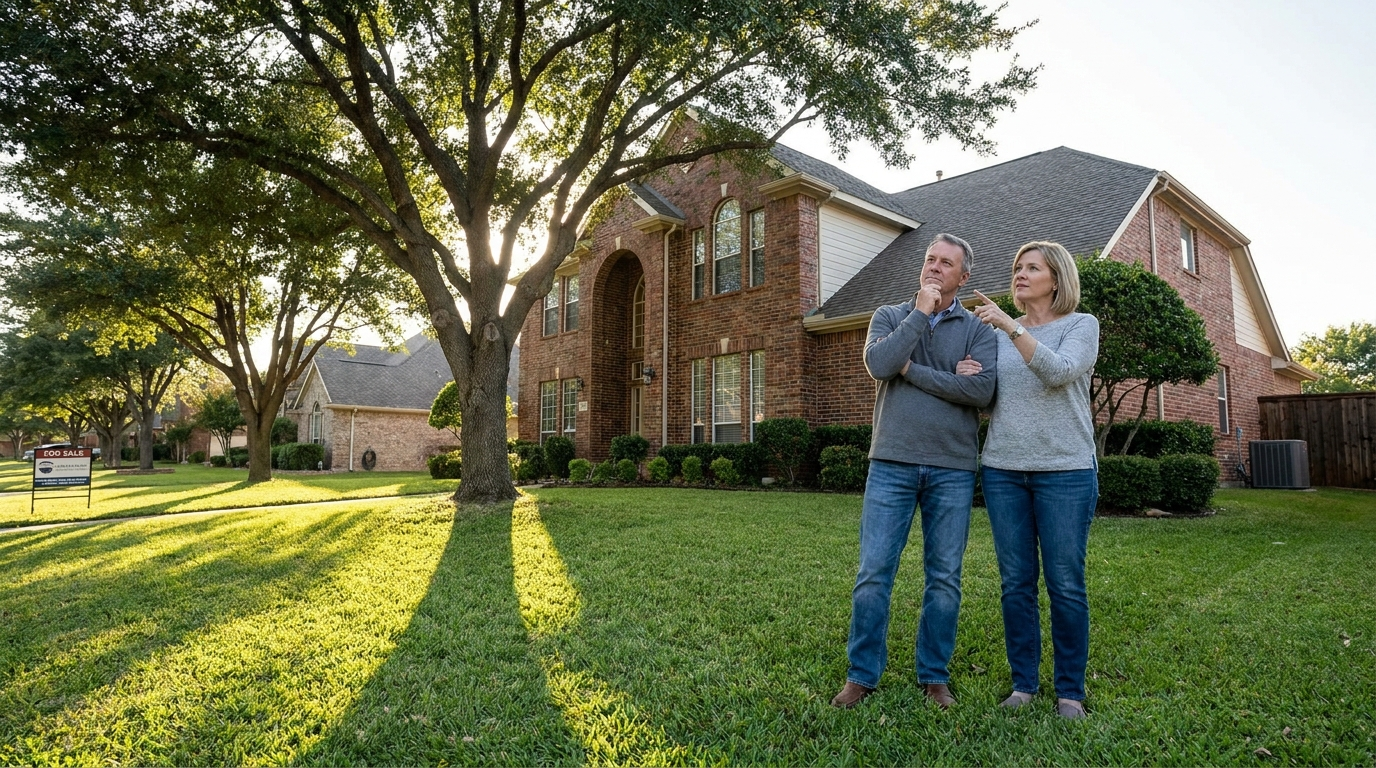
Almost every homeowner reaches this fork at some point. The family outgrows the house, the kitchen feels dated, or a growing teenager needs their own space, and the question arrives: do we fix what we have, or do we sell and start over somewhere new? It feels like a design or lifestyle question, but it is mostly a math question with an emotional layer on top. This guide walks through both, using real 2026 Dallas-Fort Worth numbers so you can make the call with your eyes open. We have helped North Texas families on both sides of this decision since 2014, and the honest answer is that neither choice is always right.
The Real Cost of Moving vs. Remodeling in DFW
People compare the sticker price of a remodel against the sticker price of a new house and stop there. That comparison misses the point. Moving carries a stack of transaction costs that never show up on a listing, and in 2026 it also carries a hidden mortgage penalty that can dwarf everything else. Let us lay out both sides on a $415,000 home, which is close to the median single-family price across the metroplex this spring.
When you sell in Texas, real estate commissions average about 5.88 percent and seller closing costs add roughly another 3.26 percent, so you lose somewhere near 8 to 9 percent of the sale price before you see a dollar. On a $415,000 home that is around $35,000 gone at the closing table. Then you buy again. Buyer closing costs typically run 2 to 5 percent, movers cost $1,500 to $4,000 for a local move, and if you trade up to a larger home you take on a bigger loan at a higher rate. Here is how the two paths stack up.
| Cost to move (sell $415k, buy $500k) | Typical DFW range |
|---|---|
| Agent commission on the sale (about 5.88%) | $24,000 to $25,000 |
| Seller closing costs (title, transfer, fees ~3.26%) | $12,000 to $14,000 |
| Buyer closing costs on the new home (2% to 5%) | $10,000 to $25,000 |
| Local movers and setup | $1,500 to $4,000 |
| New window treatments, updates, odds and ends | $3,000 to $10,000 |
| Total transaction cost, before more space | $50,000 to $78,000 |
| Remodel option (keep your home and loan) | Typical DFW installed cost |
|---|---|
| Mid-range kitchen remodel | $30,000 to $75,000 |
| Mid-range bathroom remodel | $15,000 to $30,000 |
| Room addition (400 sq ft) | $60,000 to $110,000 |
| Second-story addition (full floor) | $300,000 to $550,000 |
| Whole-home remodel | $100,000 to $250,000 |
The pattern is clear. If a dated kitchen or one missing bedroom is what is driving you out, you can usually fix that specific problem with a kitchen remodel or a room addition for less than the $50,000-plus you would spend just changing addresses. Where moving pulls ahead is when you need several major changes at once, or when the thing you want cannot be built into your current lot.
The 2026 Mortgage Rate Trap
This is the factor that changed the whole conversation over the last few years, and plenty of homeowners do not run the numbers on it until they are already talking to a realtor. Roughly 8 in 10 homeowners with a mortgage locked a rate below where rates sit today. Many DFW families refinanced or bought during the era of 3 percent loans. As of spring 2026, a 30-year fixed sits around 6.25 percent.
That gap is not small. Trade a $350,000 balance at 3 percent for a $400,000 loan at 6.25 percent and your principal-and-interest payment jumps by well over $1,000 a month. Across a decade that is six figures in extra interest, none of which buys you a nicer home. It just buys you the same amount of house at a worse rate. When you keep your home and remodel, you keep the low-rate loan you already have. For many families that single fact tips the decision toward staying, even before the emotional side enters the room.
When Remodeling Wins
Remodeling is the stronger move when the problem is the house itself and everything around it still works for your life. The clearest signs:
- You like your neighborhood, your commute, and your schools, and you would be sad to leave them.
- The issue is fixable: a closed-off kitchen, a cramped primary bath, too few bedrooms, no home office, or poor flow.
- You hold a mortgage rate well below current rates and want to protect it.
- Your lot has room to build out or up, so an addition can add the square footage you are missing.
- You have real equity and would rather reinvest it in your own home than hand a chunk to agents and lenders.
- You plan to stay five years or more, which gives a remodel time to pay you back in daily use and resale.
A remodel also lets you fix the exact thing that bothers you instead of buying someone else’s compromises. Open up a wall and add an island, convert a tub to a curbless walk-in shower, add a primary suite over the garage, or upgrade to quartz or granite counters that fit how you actually cook. You control the finishes, the timeline, and the outcome. If aging in place is on your mind, a remodel is often the only path that adapts your current home rather than forcing a move, which is why home accessibility work almost always favors staying put.

When Moving Wins
Moving is the better call when the problem is something you cannot renovate. No amount of construction changes your address, your lot size, or your commute. Move when:
- The location no longer fits: a longer commute, a school district you want to leave, or a neighborhood heading in the wrong direction.
- The lot itself is the limit, with no room to build out and setbacks or an HOA that block building up.
- You need to change several major things at once, and the combined remodel cost approaches the price of a home that already has what you want.
- The house has deep structural, foundation, or systems problems that make heavy investment risky.
- You want to move for life reasons: downsizing after the kids leave, relocating closer to family, or a job in another part of the metroplex.
- You would be over-improving, meaning your finished remodel would price the home well above the ceiling for your street.
That last point matters more than people expect. Every neighborhood has a price ceiling. Pour $250,000 into a home on a block where nothing sells above a certain number and you will not get that money back at resale. If your remodel wish list would push you past your street’s ceiling, buying in a higher-tier area can be the smarter financial move, even with the transaction costs.

DFW Market Factors in 2026
Local conditions shape this decision as much as your personal wish list. A few things worth knowing about the Dallas-Fort Worth market right now.
The metroplex has cooled from the frenzy of a few years back into a more balanced market. The median single-family price sits near $415,000 as of May 2026, up a modest 2 percent or so year over year, while Dallas County proper has seen prices soften slightly. Homes are taking longer to sell too, with days on market climbing into the 60 to 105 range in many areas instead of the under-three-weeks pace of the boom. For a seller, that stretch matters: every extra month you carry a mortgage, taxes, insurance, and utilities on a home you are trying to leave adds thousands to the true cost of moving.
The flip side is that a slower market gives buyers more room to negotiate, which softens the pain of trading up. Costs vary a lot by city, so where you live changes the math. A homeowner in Frisco or Plano sitting on strong appreciation and good schools usually has more reason to stay and remodel, while someone in an older Fort Worth neighborhood with a small lot might find a move opens up options a renovation never could. If you are weighing a specific suburb, our service-area pages break down local remodel costs and permit notes city by city.
The Emotional and Lifestyle Side
Money drives the decision, but it is not the whole story, and pretending otherwise leads to regret. A home is where your kids grew up, where you know which floorboard creaks, where the neighbors wave. Leaving that has a real cost that never shows on a spreadsheet.
Remodeling has its own emotional weight. You live through dust, noise, and a working kitchen that disappears for a few weeks. A well-run project keeps that disruption short and predictable, but it is real, and you should go in expecting it. Moving trades construction stress for logistics stress: packing a whole life into boxes, changing schools mid-year, learning a new commute, and starting over with contractors and neighbors you do not know yet. Neither path is effortless. The right question is which kind of temporary hassle you would rather absorb for the outcome you want. Many families find that a few weeks of remodeling mess is easier to stomach than uprooting everything, especially when the neighborhood is one they love. A recent national survey found that among homeowners who renovated in the past year, most chose to upgrade their current home specifically instead of moving.
A Simple Decision Framework
When homeowners ask us to help them think it through, we walk them through the same short set of questions. Answer these honestly and the direction usually becomes obvious.
- Is the problem the house or the location? If it is the location, lot, or schools, lean toward moving. If it is the space or layout, lean toward remodeling.
- Can your lot support what you need? Room to build out or up means an addition can solve it. No room means moving may be the only way to get the square footage.
- What is your current mortgage rate? A rate well below today’s means staying protects real money every month.
- Does your remodel wish list fit your street’s price ceiling? If the finished home would sit at the top of the block, remodeling is safe. If it would blow past the ceiling, moving may protect your money.
- How long will you stay? Five years or more rewards a remodel. A likely move within a year or two argues against a big renovation you will not enjoy.
- Run both totals. Add every moving cost, including the higher payment, and compare it to a remodel that fixes your specific problem. Let the honest number guide you.
Quick rule of thumb: if your list is one or two targeted fixes and you love where you live, remodel. If your list is long, your lot is maxed out, or the location itself is the issue, price out a move. And if a whole-home refresh is what you are after, our guide to whole-home remodeling in Dallas lays out how to budget it room by room.
What Each Path Really Costs You: A Side-by-Side
| Factor | Remodel | Move |
|---|---|---|
| Keep your mortgage rate | Yes | No, you take today’s rate |
| Keep your neighborhood and schools | Yes | No |
| Money lost to agents and closing | None | $50,000-plus on a $415k home |
| Fix the exact problem | Yes, you control it | Only if the new home already fits |
| Add square footage | If the lot allows | Yes, by buying bigger |
| Change location | No | Yes |
| Main disruption | Weeks of construction | Selling, packing, relocating |
| Best when | The house is the problem | The location or lot is the problem |
Frequently Asked Questions
Is it cheaper to remodel or move?
For most DFW homeowners in 2026, remodeling is cheaper than moving once you count agent commissions, closing costs, and the higher mortgage rate on a new loan. Selling and buying a $415,000 home can cost $50,000 or more in transaction fees alone, before you gain any extra space. A targeted remodel often fixes the actual problem for less.
Should I renovate or buy a new house?
Renovate when the house is the problem and you like your location, your schools, and your mortgage rate. Buy a new house when the problem is something you cannot change, like the lot size, the commute, or the neighborhood. Start by naming the single biggest reason you are unhappy, then ask whether construction can fix it.
How much does it cost to sell a house in Texas?
Selling a home in Texas typically costs 8 to 10 percent of the sale price once you include real estate commission, which averages about 5.88 percent, plus seller closing costs of around 3.26 percent. On a $415,000 home that is roughly $35,000. Buying your next home then adds another 2 to 5 percent in buyer closing costs.
Does remodeling add value to my home?
Yes, though returns vary by project. Kitchens, bathrooms, and added living space tend to return the most in the DFW market, while high-end or over-personalized work returns less. The bigger value of a remodel is often daily use, since you get years of enjoyment from a home that finally works, not just resale dollars.
What is the mortgage rate trap?
It describes homeowners who hold a low mortgage rate, often near 3 percent, and would have to take today’s 6 percent-plus rate if they moved. That jump can add over $1,000 a month on a similar loan, which locks many families in place. Keeping your home and remodeling protects the low rate you already have.
Is remodeling worth it if I might move in a few years?
If a move is likely within a year or two, hold off on major renovations you will not get to enjoy, and stick to light updates that help resale. If you plan to stay five years or more, a remodel usually pays off in both daily use and value. The break-even leans toward remodeling the longer you intend to stay.
Can I add a bedroom instead of moving to a bigger house?
Often yes. If your lot has room, a room addition or a second-story addition can add the bedrooms you need without changing your address. A 400-square-foot addition in DFW runs about $60,000 to $110,000, which frequently beats the cost of selling and buying a larger home. Our guide to second-story addition costs covers the trade-offs.
How do I know if I am over-improving my home?
You are over-improving when your finished remodel would price the home well above what other homes on your street sell for. Every block has a price ceiling. If your project pushes past it, you likely will not recover the full cost at resale, and buying in a higher-tier neighborhood may protect your money better.
Is it a good time to sell a house in Dallas-Fort Worth in 2026?
The DFW market in 2026 is more balanced than the boom years, with prices roughly flat to slightly up and homes taking 60 to 105 days to sell in many areas. Sellers still have solid equity, but longer market times mean more carrying costs. If you sell, timing your listing for spring generally brings the strongest buyer demand.
How long does a major remodel take compared to moving?
A kitchen remodel usually runs 6 to 12 weeks on site, a bathroom 3 to 6 weeks, and a room addition 2 to 4 months. Moving can feel faster once a house sells, but preparing, listing, closing, and settling in often stretches over several months too. Our kitchen remodel timeline shows what to expect week by week.
Will a remodel disrupt my daily life?
Yes, but a well-planned project keeps it contained. Expect dust, noise, and losing use of one area for a few weeks. Good contractors seal off work zones, set a schedule, and often set up a temporary kitchen. Most families find a few weeks of controlled mess easier than packing an entire household and moving it.
Does moving cost more than the price difference between homes?
Almost always. Beyond the price gap between your old and new home, moving adds commissions, closing costs on both ends, movers, and a higher interest rate. Those extras commonly total $50,000 to $80,000 or more on a mid-priced DFW home, which is money that buys you nothing but a change of address.
What if I need to remodel for accessibility or aging in place?
Accessibility almost always favors remodeling, since it adapts the home you already know to your needs. Curbless showers, wider doorways, grab bars, and single-level living can be built into most homes. Buying a fully accessible home is rare and expensive, so a targeted accessibility remodel is usually the practical path.
Should I remodel before selling or just sell as is?
If you have decided to sell, focus on light, high-return updates like paint, fixtures, and minor kitchen or bath refreshes rather than a full remodel you will not enjoy. Buyers rarely pay back a big pre-sale renovation dollar for dollar. Ask a local agent which specific fixes matter most for your price range.
How much does a whole-home remodel cost in Dallas?
A whole-home remodel in Dallas typically runs $100,000 to $250,000 depending on size, scope, and finish level, and it can go higher for luxury work or structural changes. That is a large number, but on a home you love in a location you want to keep, it often costs less than moving up to a comparable finished home at today’s rates.
Does an addition or a move add more resale value?
An addition adds value when it fits the neighborhood and does not push you past the street’s ceiling. Moving does not add value on its own, it just changes what you own. If your goal is more usable space with a solid return, a well-planned addition in the right market often makes better financial sense than trading houses.
What questions should I ask before deciding?
Ask whether the problem is the house or the location, whether your lot can support what you need, what your current mortgage rate is, whether your plans fit the street’s price ceiling, and how long you will stay. Then run both full budgets side by side. The honest totals almost always point to a clear answer.
Is remodeling stressful compared to moving?
Both carry stress, just different kinds. Remodeling means living through construction for a stretch, while moving means uprooting your whole routine, schools, and neighbors. Families who love their location often find the remodeling version easier to accept because the reward, a better home in the place they already want to be, is worth a few weeks of mess.
Can ALC Construction Pros help me decide?
Yes. We give homeowners across Dallas-Fort Worth an honest read on what a remodel would cost and whether it solves the problem, even when the answer is that moving makes more sense. There is no pressure and no charge for the conversation. Reach out to our team and we will help you run the numbers.
Talk Through Your Options With Our Team
The remodel vs move decision deserves real numbers, not a gut guess. If you are leaning toward staying, we can price out the exact project that fixes your home, whether that is a kitchen remodel, a bathroom remodel, a room addition, or a full renovation. If moving turns out to be the smarter play, we will tell you that too. ALC Construction Pros has served Dallas, Fort Worth, and the surrounding suburbs since 2014, and we are based right here in Plano. Book a free in-home consultation and we will help you make the call with confidence.




