

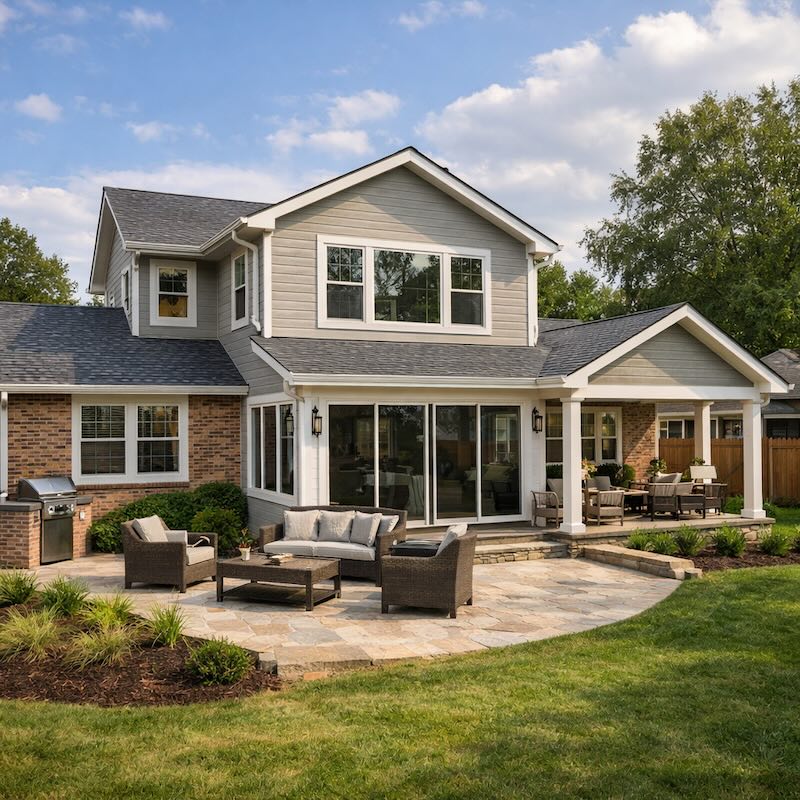
Yes, a well-designed home addition can increase a property’s market and appraised value by adding usable square footage, improving functionality, and resolving layout limitations. However, most additions do not recover their full construction cost at resale. Homeowners typically recoup approximately 30% to 60% of the project cost, depending on local demand, construction expenses, design quality, and the type of space added.
Home Additions That May Add the Most Value
-
Additional bathroom: Reduces household bottlenecks and makes the home more attractive to families and larger households.
-
Primary bedroom suite: Adds privacy, comfort, and luxury, often delivering more buyer appeal than general-purpose square footage.
-
Additional bedroom: Can move a property into a higher-value buyer category, particularly when expanding a two-bedroom home into a three-bedroom home.
-
Kitchen expansion: Improves one of the home’s most frequently used spaces while creating more room for cooking, dining, storage, and entertaining.
What Affects the Return on a Home Addition?
-
Construction cost versus added value: Foundations, framing, roofing, architectural plans, permits, plumbing, electrical work, and HVAC extensions can make an addition expensive. The value added to the home may be lower than the total project cost.
-
Neighborhood value limits: An addition may deliver a lower return if the finished property becomes significantly larger or more expensive than comparable homes in the neighborhood.
-
Layout and functionality: The addition should improve how the home feels and functions. Awkward room placement, poor circulation, or the loss of useful outdoor space may reduce buyer appeal.
-
Design consistency: An addition that matches the original home’s architecture, materials, roofline, and interior finishes is more likely to support market value than one that looks visibly attached or poorly integrated.
-
Local buyer demand: Added bedrooms, bathrooms, home offices, and expanded kitchens tend to provide stronger returns when they match what buyers in the local market actively want.
A home addition generally provides the best financial return when it solves a clear functional problem, fits the neighborhood, and feels like a natural part of the original house.
Which home additions add the most value in Dallas
Additions do not all perform the same at resale. The ones that hold their value in DFW tend to fix a genuine shortage in the floor plan, a missing bathroom, a cramped primary bedroom, no real family space, rather than pile on luxury for its own sake. When a house has three bedrooms and one bath on a street where four beds and two baths is the norm, the addition that closes that gap tends to appraise and sell well, because it moves the home into a higher comparable bracket.
The additions that recover the most in Dallas-Fort Worth right now are the practical ones:
- A second full bathroom in a one-bath house
- A primary suite that gives an older home the bedroom buyers now expect
- A family room or den that opens the house to the backyard
- A garage conversion or bonus room that adds permitted, usable square footage at a lower cost per foot
The additions that recover the least usually overshoot the block. A 600-square-foot luxury wing on a modest ranch, a detached studio nobody nearby is paying extra for, or a sunroom finished far above the level the surrounding sales support all fall into that trap. You can build them, and you may love them, but the resale math will not reward the spend. If you want a broader look at how the biggest projects pencil out, our guide on second-story addition costs in Dallas breaks the build-up option down in detail.
Home addition ROI by type in 2026
The table below blends national Cost vs. Value data with what we see in the DFW market, where the West South Central region tends to land near or slightly above the national average for return. Treat these as planning ranges, not appraisals. Your street, your finish level, and the month you sell all move the final number.
| Addition type | Typical DFW cost (2026) | Approx. cost recouped | Notes |
|---|---|---|---|
| Second full bathroom (in a 1-bath home) | $35,000 to $60,000 | 50% to 65% | Highest impact when it fixes a bed/bath shortage |
| Primary suite (bedroom, bath, closet) | $90,000 to $180,000 | 45% to 60% | Upscale versions recoup a smaller percentage |
| Family or great room | $45,000 to $110,000 | 50% to 65% | Strong when it connects to the backyard |
| Four-season sunroom | $30,000 to $80,000 | 45% to 60% | Texas heat makes glass and insulation choices matter |
| Garage conversion to living space | $20,000 to $50,000 | 55% to 70% | Lowest cost per foot; you give up covered parking |
| Second-story addition | $250 to $500 / sq ft | 40% to 60% | Large scope; value hinges on lot and comps |
| Detached ADU or guest suite | $120,000 to $250,000 | 40% to 55% | Rental income can beat the resale percentage |
One pattern runs through the whole table. The cheaper, gap-filling projects near the top recoup a higher share than the big custom builds near the bottom. That is not a knock on primary suites or second stories. It is just the reality that the larger the budget, the harder it is to recover as a percentage. For city-level detail, our McKinney home additions guide shows how these ranges shift in one specific suburb.
What “adds value” actually means
Two different things get called value, and confusing them is where homeowners set themselves up for disappointment. Appraised value is what a licensed appraiser assigns based on comparable sales, driven mostly by heated square footage and bed and bath count. Market value is what a buyer will actually pay, which can run above the appraisal when inventory is tight. Return on investment is the slice of your project cost you recover, and for additions that number sits well under 100 percent almost every time.
Here is the part that surprises people. An appraiser does not credit you for what the addition cost to build. They credit you for what comparable homes with that square footage and bedroom count have recently sold for nearby. Typical adjustments are modest, often around $5,000 for a bathroom and $5,000 to $10,000 for a bedroom, and they only apply when the space is permitted and legal. A new bedroom needs a proper egress window under the International Residential Code to count as a bedroom at all. Skip that window and you have built a bonus room, not a bedroom, in the eyes of both the appraiser and the multiple listing service.
Dallas-Fort Worth resale factors that change the math
Local conditions move your return more than any national average does. Five factors matter most across DFW:
- The neighborhood price ceiling. Every area has a top sale price. Spend past it and the market will not follow you up.
- Inventory and demand. When listings are scarce, added square footage and a missing bathroom can push your sale price above what you spent. In a soft market the same project recoups less.
- How well it matches the house. An addition with matching brick, matching rooflines, and natural floor flow holds value. One that looks bolted on gets discounted by buyers on sight.
- School attendance zones. In Frisco, Plano, and parts of McKinney, a fourth bedroom in a strong school zone carries real weight with buyers.
- Lot, setbacks, and yard. Building up preserves yard space but costs more per foot. Building out is cheaper but eats land that some buyers value.
None of these show up in a generic online ROI chart, and all of them can swing your recovery by twenty points or more. This is exactly why we walk the property and pull local comparable sales before recommending an addition through our room additions service in Dallas.
The over-improving trap
The fastest way to lose money on an addition is to build past what your block supports. If homes on your street top out around $450,000, a $150,000 addition will not create a $600,000 house. The comparable sales cap it. Appraisers call this the ceiling, and it is the single most common reason a well-built addition returns a poor percentage.
Before you commit, look at the three or four highest recent sales within about a half mile and make sure your finished project still fits under that number with room to spare. If your addition would make yours the most expensive house on the street by a wide margin, scale the scope back or pick finishes that match the neighborhood instead of exceeding it. A right-sized project that lands mid-pack in your area almost always returns more than an oversized one that stands alone.
Permits, appraisals, and legal square footage
Unpermitted square footage is a resale liability, not an asset. If the addition was never permitted, an appraiser can exclude it, a lender may refuse to count it, and a buyer’s inspector will flag it during the sale. In Dallas and the surrounding cities, any addition that touches structure, electrical, or plumbing needs a permit and a final inspection.
Pulling the permit does more than keep you legal. It creates the paper trail that lets the new space be measured into the home’s official square footage, which is the figure that actually moves the appraisal. We pull and manage permits as part of every addition, so the finished space counts when it is time to sell or refinance. If you are weighing a bigger project, our whole-home remodeling team handles the same permitting the same way.
When a home addition pays off: a simple framework
An addition tends to be worth building when four things line up:
- It fixes a real deficiency versus neighboring homes, such as a low bed or bath count or no family space.
- The finished home value stays under the neighborhood ceiling.
- You plan to stay at least three to five years, so you enjoy the space and give the market time to catch up.
- The design blends with the existing house instead of announcing itself as an add-on.
An addition is harder to justify when you are selling within a year, when the project pushes you well past comparable sales, or when the same budget spent on a kitchen remodel or a bathroom update would return more. Sometimes the honest answer is that moving makes more sense than building, and we lay out both sides of that in our remodel vs. move comparison.
Cost to build vs value added: four Dallas scenarios
These four examples show the same principle at work. Additions that fill a gap the neighborhood expects recover more than oversized luxury builds, even when the luxury build adds more raw dollars.
| Scenario | Project cost | Estimated value added | Recouped |
|---|---|---|---|
| Adding a 2nd bathroom to a 3/1 house on a 3/2 street | $45,000 | $28,000 to $34,000 | ~62% to 75% |
| 120 sq ft primary bath and closet bump-out | $55,000 | $28,000 to $34,000 | ~50% to 62% |
| 400 sq ft family room addition off the kitchen | $85,000 | $45,000 to $55,000 | ~53% to 65% |
| 600 sq ft luxury primary wing on a modest block | $160,000 | $65,000 to $80,000 | ~40% to 50% (ceiling limited) |
Notice the top row. A modest second bathroom in the right situation can recover three quarters of its cost, more than double the percentage of the luxury wing at the bottom, because it fixes exactly what buyers in that bracket are missing. Value follows need, not spend.
Frequently asked questions
Do home additions add value to a house?
Yes, most additions add value, though they seldom return their full cost. A well-planned addition in Dallas-Fort Worth typically recovers 45 to 65 percent of what you spend at resale. The gap-filling projects, like a second bathroom or a missing bedroom, recover the most; luxury builds recover the least.
What home addition adds the most value?
A second full bathroom in a one-bath home usually adds the most value per dollar, followed by a bedroom or primary suite that brings the house in line with neighboring homes. Additions that fix a real shortage in the floor plan beat luxury square footage on return almost every time.
How much value does adding a bedroom add?
Adding a legal bedroom often raises home value by roughly 10 to 20 percent, depending on the neighborhood and the starting bedroom count. The value comes from moving the house into a higher comparable bracket, not from the build cost. The room must have proper egress to count as a bedroom.
How much does a second bathroom add to home value?
A second bathroom added to a one-bath home is one of the highest-return additions, often recouping 50 to 65 percent or more in DFW because it removes a major buyer objection. The value is largest when the surrounding homes already have two baths and yours is the outlier.
Do you get your money back on a home addition?
Rarely all of it. Most additions return 40 to 70 percent of their cost at resale. You make up the rest in the years you actually live in and use the space, which is why additions make the most sense when you plan to stay at least three to five years.
Is it better to add on or buy a bigger house?
It depends on your equity, your current rate, and how much the addition would cost versus moving fees. Adding on keeps your location and your mortgage rate, while moving buys instant space but adds agent commissions and closing costs. Our remodel vs. move guide compares both paths in detail.
Does a sunroom add value in Texas?
A four-season sunroom can add value, usually recouping 45 to 60 percent, but Texas heat makes the details decisive. Proper insulated glass, shading, and a real HVAC connection separate a room buyers count as living space from a hot add-on they discount. Three-season rooms add less.
Does converting a garage add or reduce value?
It can go either way. A permitted, well-finished garage conversion adds affordable square footage and often recoups 55 to 70 percent. But in areas where buyers expect covered parking, losing the garage can offset the gain. Keeping the ability to convert it back helps protect resale.
Does a home addition need a permit in Dallas?
Yes. Any addition that changes the structure or adds electrical or plumbing requires a permit and inspections in Dallas and surrounding cities. Permitting is what lets the new space count toward your official square footage, so skipping it can cost you at appraisal and create problems at resale.
Will an unpermitted addition hurt resale?
It usually does. Unpermitted space can be excluded from the appraisal, flagged by inspectors, and questioned by lenders, which narrows your buyer pool and lowers offers. Legalizing it after the fact is possible but slow and expensive. Permitting from the start is far cheaper than fixing it later.
How does an appraiser value an addition?
An appraiser compares your home to recent nearby sales with similar square footage and bed and bath counts. They credit the addition based on what those comparable homes sold for, not what your project cost. Only permitted, legal square footage gets counted in the measurement.
What does over-improving a home mean?
Over-improving means spending so much that your finished home would be worth more than the top sales in your neighborhood support. The comparable sales cap the value, so the extra spend does not come back. It is the most common reason a good addition returns a poor percentage.
Does adding square footage always increase value?
Usually, but not always by enough to justify the cost. Added heated square footage generally raises appraised value, yet the gain is limited by the neighborhood ceiling and by whether the space is permitted and legal. Poorly designed or unpermitted additions can add little or nothing.
Is a primary suite addition worth it?
A primary suite is worth it when the home lacks a bedroom the neighborhood expects and the budget stays under the local ceiling. Expect to recoup 45 to 60 percent, with upscale versions on the lower end. The livability payoff is real even when the resale percentage is modest.
Do additions increase property taxes in Texas?
Yes. An addition raises your county-appraised value, which raises your property taxes. Texas caps annual appraisal increases on a homestead at 10 percent, but new improvements are added to the value on top of that cap in the first year. Check with your county appraisal district for specifics.
How long before an addition pays off?
Because most additions recover only part of their cost at resale, they pay off through use, not a quick flip. Homeowners who stay three to five years or longer get the most out of the space and give local prices time to rise, which narrows the gap between cost and recovered value.
Is building up or building out better for value?
Building up preserves yard space and suits tight lots but costs more per square foot because of structural work. Building out is usually cheaper but consumes land some buyers value. The better choice for value depends on your lot size, setbacks, and what comparable homes in your area offer.
Does an ADU add value in Dallas?
An accessory dwelling unit can add value and, more importantly, rental or multigenerational income that often beats the resale percentage. Detached ADUs recoup roughly 40 to 55 percent on paper, but the monthly income and flexibility can make the total return stronger than the appraisal alone suggests.
How much does a home addition cost in DFW in 2026?
Most Dallas-Fort Worth additions run from about $150 to $300 per square foot in 2026, so a 400-square-foot room addition typically lands between $60,000 and $120,000 finished. Second-story and high-end suite additions cost more per foot because of structural and finish work.
Do second-story additions add value?
They can, especially on small lots where you cannot build out, but they carry the largest scope and the widest range of return, roughly 40 to 60 percent. Foundation capacity, temporary living arrangements, and neighborhood comps all shape whether a second story pays off.
What addition has the best ROI overall?
Across DFW, lower-cost gap-fillers lead: a second bathroom, a garage conversion, or a bedroom that corrects a bed count below the neighborhood norm. They cost less per foot and fix what buyers actually miss, so a higher share of the spend comes back at resale.
Should I remodel or move instead of adding on?
If you like your location, schools, and mortgage rate, adding on or remodeling usually beats moving once you account for commissions and closing costs. If your needs have outgrown the lot itself, moving may win. Compare the finished cost of each before deciding.
Planning an addition in Dallas-Fort Worth
The homeowners who come out ahead on additions are the ones who match the project to the neighborhood before the first wall goes up. That means pulling local comparable sales, checking the price ceiling, right-sizing the scope, and permitting the work so the new space counts. Get those pieces right and even a project that recovers 60 percent on paper can feel like money well spent, because you also get years of a home that finally fits.
ALC Construction Pros has designed and built additions across Dallas, Fort Worth, and the surrounding suburbs since 2014. We will walk your property, review what comparable homes in your area are doing, and give you an honest read on what your addition is likely to return before you spend a dollar. Browse our past remodeling projects or explore home accessibility additions if aging in place is part of your plan.
Ready to see what your addition could add? Request a free addition ROI assessment and we will give you real numbers for your home and your block. Serving Dallas, Plano, Frisco, McKinney, Allen, Arlington, Flower Mound, and Fort Worth.




