

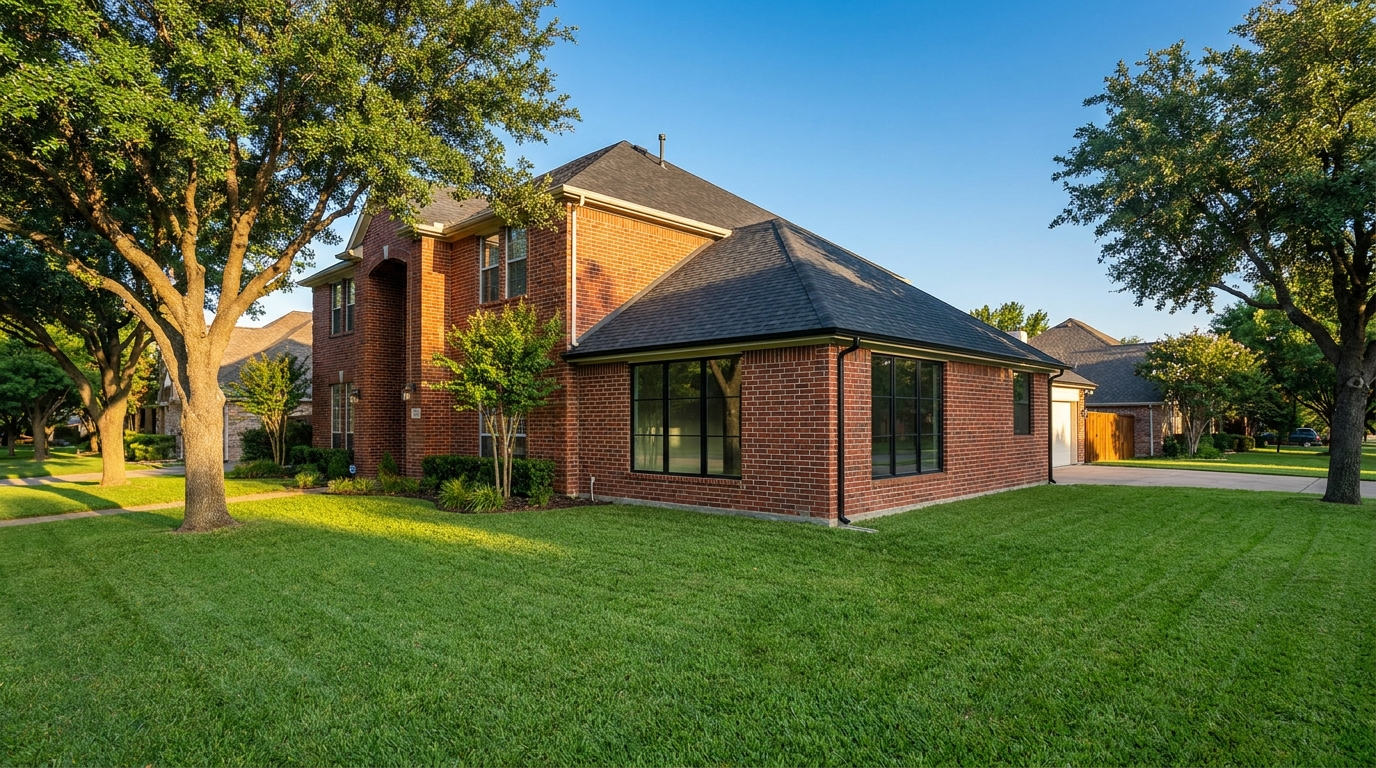
A home addition in McKinney, TX runs about $150 to $275 per square foot in 2026, so a 400-square-foot room addition usually costs $60,000 to $110,000 fully finished. Simple bump-outs start near $45,000, while a primary suite or a second story can pass $200,000. What you pay comes down to foundation work, whether you add plumbing, and the finish level you choose.
What a home addition costs in McKinney (2026)
McKinney has grown fast, and a lot of that growth happened in master-planned neighborhoods like Stonebridge Ranch and Craig Ranch where lots are generous and floor plans were built for families. When those families outgrow the house, adding on often makes more sense than paying today’s prices to move. Home remodeling in McKinney has shifted toward additions for exactly that reason, and the first question every homeowner asks is what it costs.
The honest answer is a range, because an addition is really several trades stacked on top of each other. A finished-out bonus room over a garage is not the same project as a ground-up primary suite with a full bath. Here is how the per-square-foot math tends to shake out across McKinney in 2026.
| Addition tier | Cost per sq ft (installed) | Typical 400 sq ft project | What you get |
|---|---|---|---|
| Basic / bonus finish-out | $110 – $160 | $44,000 – $64,000 | Enclosing existing space, simple finishes, no new plumbing |
| Standard room addition | $160 – $220 | $64,000 – $88,000 | New slab, framing, HVAC, electrical, mid-range finishes |
| Suite or wet-room addition | $220 – $300 | $88,000 – $120,000 | New plumbing, tile, cabinetry, higher-end finishes |
| Second-story addition | $250 – $500 | $100,000 – $200,000+ | Structural reinforcement, stairs, whole-floor buildout |
For a wider view of how these numbers compare across the metroplex, our Dallas room addition cost guide breaks down the same tiers for the broader market, and the second-story addition cost guide goes deep on building up rather than out.
Cost by addition type
Per-square-foot pricing is a starting point, but most homeowners think in terms of the room they want. The table below reflects typical finished costs for the additions McKinney families request most. Sizes are approximate, and the ranges assume a licensed crew pulling permits and doing the work to code.
| Addition type | Typical size | 2026 cost range (McKinney) |
|---|---|---|
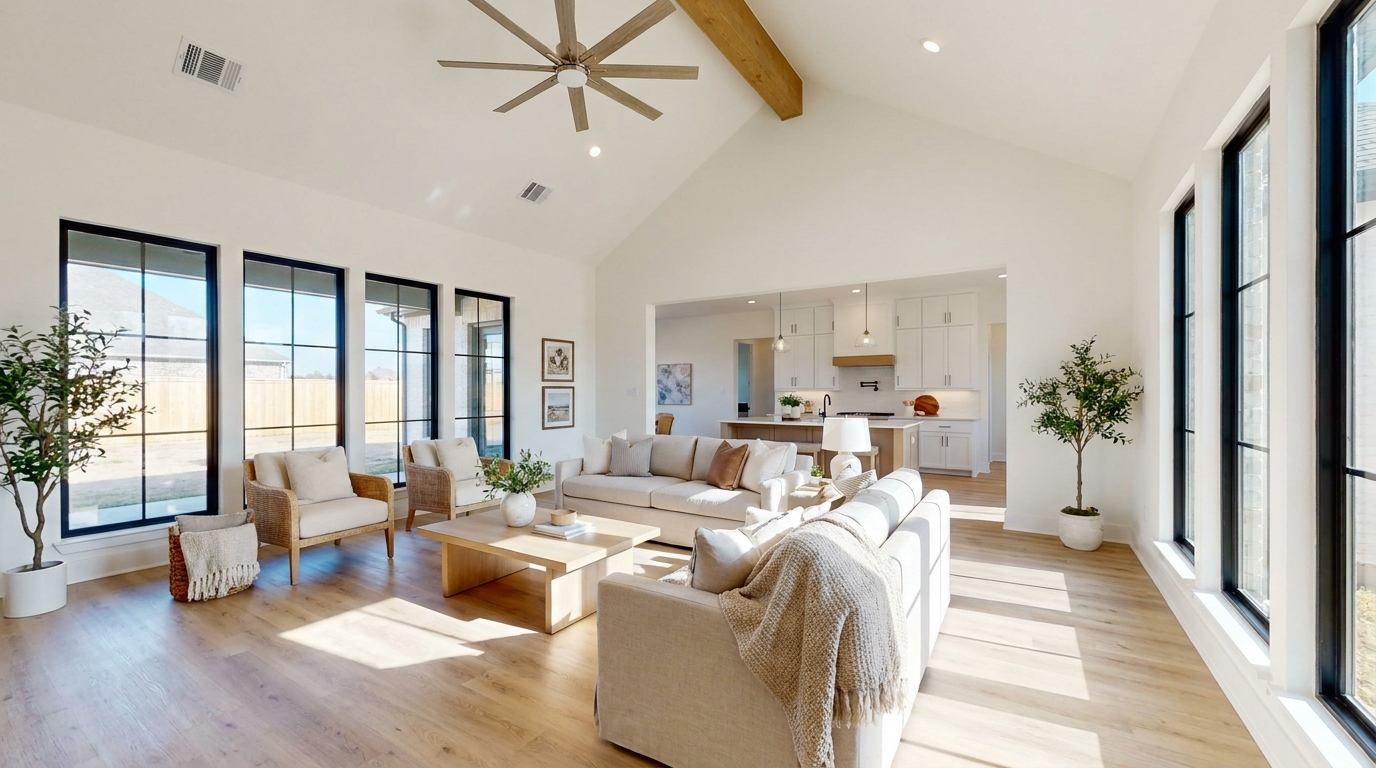
| Family room / great room | 300 – 500 sq ft | $55,000 – $110,000 |
| Primary suite (bed + bath + closet) | 400 – 600 sq ft | $90,000 – $180,000 |
| Kitchen expansion / bump-out | 150 – 300 sq ft | $45,000 – $95,000 |
| Sunroom / four-season room | 200 – 350 sq ft | $40,000 – $90,000 |
| Home office or flex room | 150 – 250 sq ft | $35,000 – $70,000 |
| In-law suite / attached ADU | 500 – 800 sq ft | $110,000 – $220,000 |
| Garage conversion (to living space) | 400 – 500 sq ft | $25,000 – $65,000 |
| Second-story addition | 800 – 1,200 sq ft | $200,000 – $450,000 |
Garage conversions look cheap on this list because the roof, slab, and walls already exist. You are mostly insulating, adding HVAC, and finishing the interior. The catch is that you lose covered parking, which some McKinney HOAs and resale buyers care about. A kitchen expansion, on the other hand, tends to return more at resale even though it costs more per foot, since kitchens drive buying decisions. If a full kitchen is part of your plan, our Dallas kitchen remodel cost breakdown pairs well with an expansion budget.
The 6 biggest cost drivers
Two additions of the same size can be $40,000 apart. The difference almost always traces back to these six factors, so it helps to know where your money goes before you sign anything.
1. Foundation and slab work
Nearly every McKinney home sits on a slab. Extending that slab means excavation, forming, rebar, and a fresh concrete pour, which typically runs $8,000 to $20,000 depending on size and how the new pad ties into the old one. North Texas expansive clay soil is the reason this step matters so much. A footing that is not engineered for our soil movement is how you end up with cracked drywall two summers later.
2. Plumbing
Adding a bathroom or moving a kitchen into new space means running supply lines and drains, and often cutting the existing slab to connect. Plumbing for an addition usually adds $5,000 to $15,000. A dry room with no water, like an office or living room, skips this entirely, which is why those additions cost less per foot.
3. HVAC capacity
New square footage needs conditioned air, and Texas summers do not forgive an undersized system. Sometimes you can extend existing ductwork for $3,000 to $8,000. Other times the existing unit cannot handle the load and you need a mini-split or a larger system, which pushes the number higher. A good contractor runs a load calculation rather than guessing.
4. Electrical
Outlets, lighting, and circuits for the new space add $3,000 to $8,000. If your panel is already near capacity, which is common in homes built before the mid-2000s, an upgrade adds a few thousand more. Additions with kitchens or large HVAC loads are the ones most likely to trigger a panel upgrade.
5. Rooflines and tie-ins
Blending a new roof into the existing one so it looks original, sheds water correctly, and matches your shingles is skilled work. A simple flat tie-in is cheap. A two-story addition or a complex gable that has to marry an existing roof pitch costs more in both labor and material.
6. Finish level
This is the lever you control most. Standard drywall, builder-grade trim, and luxury vinyl plank sit at the low end. Custom cabinetry, natural stone, hardwood, and designer lighting can double the finish budget. Matching new finishes to the rest of your home usually looks better than going high-end in one room and leaving everything around it dated.
Popular addition types in McKinney
McKinney is really two housing markets under one city name, and the addition that fits depends on which one you live in. Newer homes in Stonebridge Ranch, Craig Ranch, and the developments north of US-380 tend to be large two-story builds from the 2000s and 2010s. Owners there usually add a downstairs primary suite for aging in place, expand a family room, or convert a formal dining room into flex space and bump out the kitchen. Since these homes already have the square footage, the goal is usually better function rather than more rooms.
Closer to historic downtown McKinney, the housing stock is older and smaller, with tighter lots and more character. Additions there lean toward primary suites, second bathrooms, and rear family-room extensions that respect the original architecture. On some of these lots, building up is the only option, and our second-story addition guide covers when that makes sense. Multigenerational living is also driving demand for in-law suites and attached ADUs across both areas, which ties closely to home accessibility remodeling for households planning to keep a parent close.
McKinney permits, zoning, and HOA notes
A home addition in McKinney needs a building permit. There is no gray area on this one. Additions expand the footprint or add conditioned space, and the City of McKinney requires a permit for both. Skipping it risks fines, problems at resale, and an inspector making you open finished walls later.
Permits go through the City of McKinney Building Inspections department, and applications are submitted online through the city’s Citizen Self-Service portal. Plan review for a residential addition typically takes around 21 days for the first cycle. If the plans come back with correction comments, each round of revisions adds time, which is one more reason to work with a contractor who submits complete, code-ready drawings the first time. Permit fees are based on the valuation of the project rather than a flat rate, so a larger addition costs more to permit. For current figures you can reach Development Services at 972-547-7475 or Building Inspections at 469-617-4800.
| Requirement | What to know in McKinney |
|---|---|
| Building permit | Required for all additions; submitted via Citizen Self-Service portal |
| Plan review time | Around 21 days for the first review cycle |
| Permit fee basis | Calculated on project valuation, not a flat fee |
| Setbacks | Front, side, and rear setbacks limit how close you can build to property lines |
| HOA / ACC approval | Stonebridge Ranch, Craig Ranch, and similar communities require architectural committee sign-off before you start |
| Inspections | Foundation, framing, electrical, plumbing, mechanical, and final |
If you live in a master-planned community, the HOA step matters as much as the city permit. Stonebridge Ranch and Craig Ranch both run architectural control committees that review exterior changes for brick color, roofline, and how the addition reads from the street. Get that approval in writing before demolition, because an HOA can force changes even after the city has signed off. Setbacks are the other early checkpoint. Collin County and McKinney zoning set minimum distances from your property lines, and on a tighter lot those setbacks can decide whether you build out or up.
How long a McKinney addition takes
Most single-room additions in McKinney take three to five months from the first design meeting to the final walkthrough. Larger suites and second-story projects run longer. The build itself is often faster than the paperwork and material lead times around it, so the calendar below assumes a normal permit cycle and no major surprises in the slab.
| Phase | Typical duration | What happens |
|---|---|---|
| Design and selections | 3 – 6 weeks | Plans, structural engineering, finish choices |
| Permitting and HOA | 3 – 6 weeks | City plan review plus architectural committee approval |
| Foundation | 1 – 2 weeks | Excavation, forming, pour, and cure |
| Framing and roof | 2 – 3 weeks | Walls, trusses, roof tie-in, dry-in |
| Rough-ins | 2 – 3 weeks | Electrical, plumbing, HVAC, inspections |
| Finishes | 3 – 5 weeks | Insulation, drywall, paint, flooring, trim, fixtures |
| Final and walkthrough | 1 week | Final inspection, punch list, handover |

Do home additions add value? ROI in the McKinney market
Additions rarely return 100 percent of their cost at resale, and that is fine, because most people add on to live better rather than to flip. That said, McKinney is a strong market to invest in. The median sale price sits in the $479,000 to $505,000 range in 2026, and neighborhoods like Craig Ranch and Stonebridge Ranch have appreciated roughly 28 to 31 percent in recent years. Buyers here pay for usable square footage, so a well-built addition holds value better than in a softer market.
| Addition type | Typical resale ROI | Best for |
|---|---|---|
| Kitchen expansion | 55% – 80% | Resale and daily use |
| Garage conversion | 55% – 80% | Cheap square footage, flex space |
| Family room addition | 50% – 65% | Growing families |
| Primary suite addition | ~54% | Long-term owners, aging in place |
| Bathroom addition | 50% – 60% | One-bath homes |
| Second-story addition | 40% – 50% | Tight lots, staying put |
The projects that pay back best add function buyers can see and use: more kitchen, a primary suite, an extra bathroom, or living space that connects naturally to the rest of the house. The ones that pay back worst are the most personal or the most over-built for the block. If you spend $250,000 turning a $480,000 house into the most expensive home on the street, you will not get all of it back. A quick way to sanity-check your plan is to compare it against a whole-home remodel, since sometimes reworking existing space beats adding new.
Living through construction
You can usually stay in your McKinney home during an addition, since the work happens outside your existing footprint until the final tie-in. The messy stretches are the slab pour, when heavy equipment is in the yard, and the tie-in, when a wall between old and new opens up and dust travels. A good crew seals off the work zone with plastic, protects your flooring, and keeps a clear path so your daily life keeps moving. If the addition touches your only kitchen or only bathroom, plan for a short window without it and talk through that schedule up front.
How to choose a McKinney addition contractor
An addition is structural work that changes your roof, foundation, and mechanical systems, so the contractor matters more than on a cosmetic remodel. Texas does not license general remodelers the way some states do, which means the burden is on you to vet carefully. Start with proof of general liability insurance and workers’ compensation, then ask to see permits they have pulled in McKinney and photos of additions they have actually built, not just kitchens and baths.
Ask how they handle North Texas soil and foundation engineering, whether a structural engineer stamps the plans, and how they tie the new roof and slab into the old. Get the scope, allowances, and payment schedule in writing, and be wary of any bid that comes in far below the others, since that gap usually reappears later as a change order. You can read more about vetting a crew and see our completed work on the about page and in our past projects. ALC Construction Pros has remodeled homes across the metroplex since 2014, and our room additions and extensions service page walks through how we plan and build each one.
Frequently asked questions
How much does a home addition cost in McKinney, TX?
Most home additions in McKinney cost $150 to $275 per square foot in 2026. A standard 400-square-foot room addition runs $60,000 to $110,000 finished. Simple bump-outs start near $45,000, and primary suites or second stories can exceed $200,000, depending on plumbing, foundation work, and finishes.
Do I need a permit to build an addition in McKinney?
Yes. Every home addition in McKinney requires a building permit through the City of McKinney Building Inspections department. Additions add conditioned space or expand the footprint, both of which trigger permitting, inspections, and plan review. Building without one risks fines and complications when you sell.
How long does an addition take to build in McKinney?
A single-room addition usually takes three to five months from design to final walkthrough. Design and permitting account for six to twelve weeks of that, and the physical build runs eight to fourteen weeks. Larger suites and second-story additions take longer.
Is it cheaper to build up or build out?
Building out is usually cheaper per square foot because it avoids structural reinforcement and stairs. Building up costs $250 to $500 per square foot but saves your yard and works on tight lots. On a small downtown McKinney lot with little side yard, building up is often the only real option.
How much does it cost to add a primary suite in McKinney?
A primary suite addition with a bedroom, bathroom, and closet typically costs $90,000 to $180,000 in McKinney. The bathroom drives much of the price through plumbing, tile, and fixtures. A downstairs primary suite is popular for aging in place in two-story Stonebridge Ranch and Craig Ranch homes.
What is the cheapest way to add square footage?
Converting an existing garage or finishing a bonus space is the cheapest way to add living area, often $25,000 to $65,000, because the roof, walls, and slab already exist. The trade-off is losing covered parking, which some HOAs and buyers value in McKinney.
Do home additions add value in McKinney?
Yes, though returns vary. Kitchen expansions and garage conversions recoup roughly 55 to 80 percent, family room and bathroom additions around 50 to 60 percent, and primary suites near 54 percent. McKinney’s strong market and demand for square footage help additions hold value better than in slower areas.
Can I add a second story to my McKinney home?
Often, yes, but it requires a structural engineer to confirm the existing foundation and walls can carry the load. Second-story additions cost $250 to $500 per square foot and add stairs and structural work. They make the most sense on small lots where building out is not possible.
Will my HOA approve an addition?
Master-planned communities like Stonebridge Ranch and Craig Ranch require architectural committee approval before you build. They review brick and roof matching, setbacks, and how the addition looks from the street. Get written approval before demolition, because an HOA can require changes even after the city permits your plans.
How much does it cost to extend a slab foundation?
Extending a slab for a ground-floor addition typically costs $8,000 to $20,000 in McKinney, depending on size and how it ties into the existing foundation. North Texas expansive clay soil makes proper engineering essential to avoid future cracking and settling.
Does an addition need its own HVAC?
New square footage needs conditioned air. Sometimes you can extend existing ductwork for $3,000 to $8,000. If your current system cannot handle the added load, a mini-split or a larger unit is needed. A load calculation determines which path your home requires.
Can I live in my home during the addition?
Usually yes. Most of the work happens outside your existing living space until the final tie-in. The dustiest stretches are the slab pour and the moment a wall opens between old and new. A good crew seals the work zone and protects your floors so daily life continues.
How much does a family room addition cost?
A family room or great room addition of 300 to 500 square feet runs $55,000 to $110,000 in McKinney. Because it has no plumbing, the cost per foot is lower than a suite. Connecting it cleanly to the existing kitchen improves both function and resale appeal.
What is an ADU and can I build one in McKinney?
An accessory dwelling unit is a small secondary living space, either attached or detached, with its own kitchen and bath. McKinney allows them under specific zoning and lot rules, so eligibility depends on your property. Attached in-law suites are a common path and cost $110,000 to $220,000.
How do I keep my addition from looking added-on?
Match the brick, roof pitch, shingles, window style, and trim to the original house, and tie the rooflines together cleanly. The interior should carry the same flooring and ceiling height where possible. Skilled tie-in work is what makes an addition read as if it was always there.
Should I remodel or add on?
If your home has the square footage but poor flow, a remodel that reworks existing space can beat an addition on cost. If you genuinely need more room, an addition is the answer. Many McKinney projects combine both, expanding and reworking together for one cohesive result.
Do you serve neighborhoods outside McKinney?
Yes. Along with McKinney, ALC Construction Pros builds additions in Frisco, Allen, Plano, and across the Dallas-Fort Worth metroplex. You can see the full list on our service areas page.
What upgrades pair well with an addition?
Homeowners often combine an addition with a kitchen remodel or a bathroom remodel so the new and existing spaces match. Bundling related work into one project usually saves on mobilization and keeps finishes consistent throughout the home.
Ready to add space to your McKinney home?
The right addition gives your family room to grow without leaving a neighborhood you love. ALC Construction Pros designs and builds additions across McKinney and the wider metroplex, from a single family room to a full primary suite, and we handle the engineering, permits, and HOA approvals so you do not have to. See what we do on our McKinney remodeling page, then request a free McKinney addition quote and we will walk your home, talk through options, and give you a realistic budget.