
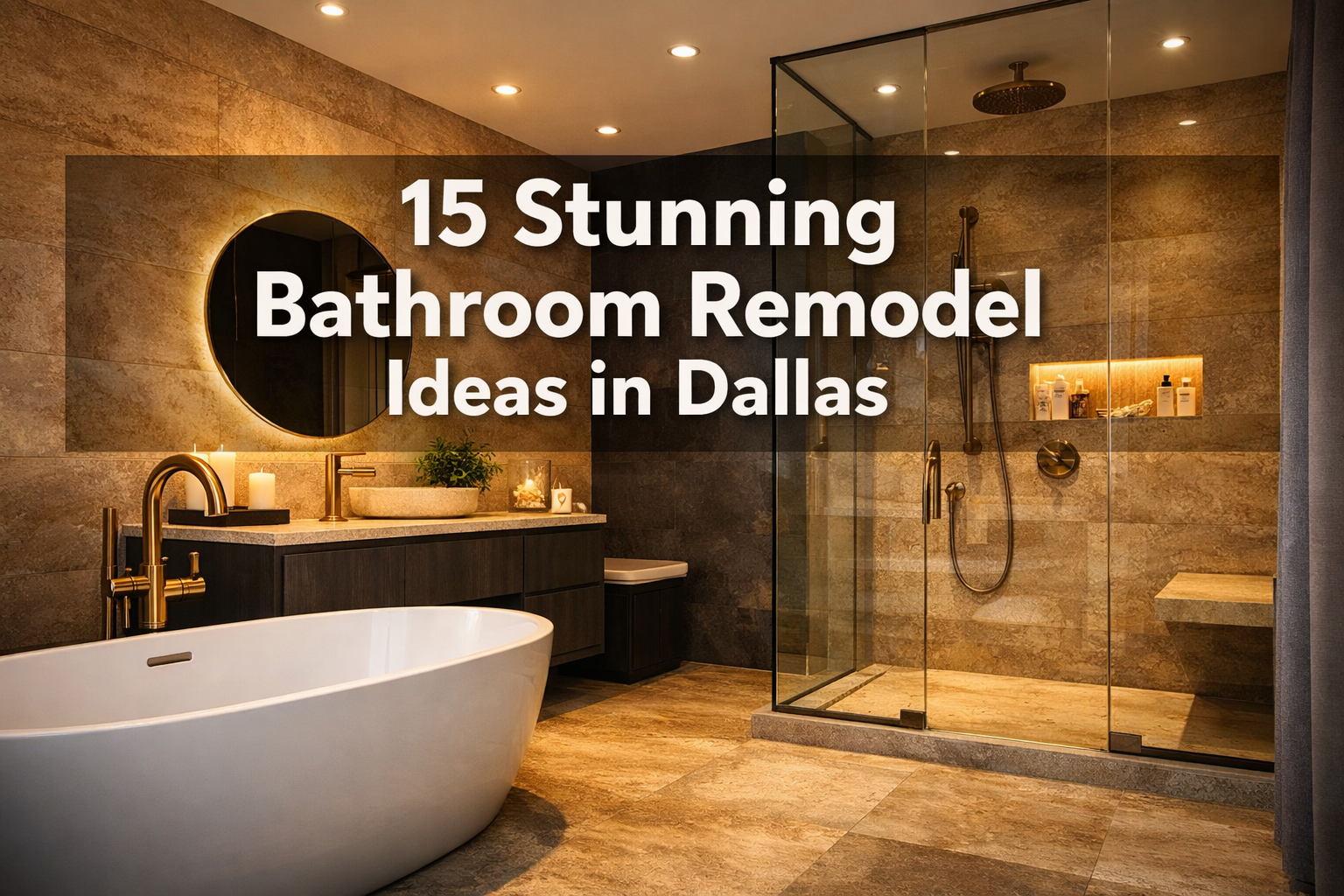
The most impactful bathroom remodel ideas for Dallas homeowners in 2026 center on wellness-inspired design, natural materials, and smart technology integration. Whether you’re updating a compact guest bath or overhauling a master suite, the strongest upgrades combine curbless showers, layered lighting, warm stone finishes, and space-efficient layouts. Dallas’s mix of traditional ranch homes and newer builds means there’s no single formula, but the ideas below cover what’s working across price points and home styles throughout the DFW area.
Key Takeaways
- Wellness-focused design is the defining direction for 2026 bathroom renovations in Dallas, replacing sterile all-white aesthetics with warm, calming environments.
- Curbless showers offer a modern look, easier cleaning, and long-term accessibility benefits that suit a wide range of Dallas homeowners.
- Layered lighting with multiple sources (task, ambient, accent) dramatically improves both function and atmosphere without a major structural investment.
- Natural finishes including stone-look tile, wood-look porcelain, and brushed metal fixtures are outperforming glossy, high-contrast options in resale appeal.
- Smart bathroom features such as heated floors, motion-activated lighting, and digital shower controls are increasingly standard in mid-to-upper remodels.
- Small bathroom renovations benefit most from floating vanities, large-format tile, and frameless glass enclosures that visually expand tight spaces.
- Color palettes in 2026 lean toward warm neutrals, earthy terracottas, and soft sage greens rather than stark whites or bold statement colors.
- Tub-to-shower conversions remain one of the highest-ROI upgrades for Dallas homes where soaking tubs go largely unused.
- Budget matters significantly: a mid-range Dallas bathroom remodel typically runs between $10,000 and $25,000, while full master suite overhauls can exceed $40,000.
- Hiring a licensed local contractor familiar with Dallas building codes and permit requirements prevents costly delays and inspection failures.
What Are the Top Bathroom Remodel Ideas Trending in Dallas for 2026?
The dominant theme in Dallas bathroom remodeling right now is the wellness sanctuary concept. This isn’t just a design trend borrowed from luxury hotels; it reflects a genuine shift in how DFW homeowners think about their bathrooms. Rather than purely functional spaces, bathrooms are increasingly treated as private retreats designed for daily restoration.
What does that look like in practice? A few consistent elements keep appearing across Dallas remodels:
- Warm natural materials like travertine, limestone-look porcelain, and teak-adjacent wood tones replacing cold marble and stark white subway tile
- Curbless or zero-threshold showers that create a seamless floor transition and a more open visual flow
- Freestanding soaking tubs positioned as focal points rather than afterthoughts
- Matte black, brushed gold, and brushed nickel fixtures replacing chrome as the default hardware finish
- Steam shower enclosures becoming more common in master bath renovations, especially in homes over 2,500 square feet
- Integrated smart technology including digital shower controls, heated tile floors, and programmable LED mirrors
It’s worth noting that not every trend fits every home. A 1970s ranch-style home in Garland has different structural constraints than a newer build in Frisco or Plano. The ideas below are organized to help Dallas homeowners identify what’s realistic for their specific situation, not just what looks good on a renovation website.
For a broader look at what’s possible across your home, the complete guide to Dallas home remodeling and renovations covers how bathroom projects fit into larger renovation strategies.
How Can You Maximize Space in a Small Dallas Bathroom?
Small bathrooms are one of the most common renovation challenges in older Dallas neighborhoods like Oak Cliff, East Dallas, and parts of Irving. The good news is that several design strategies reliably make compact bathrooms feel significantly larger without moving walls.
The most effective space-expanding bathroom remodel ideas for small bathrooms:
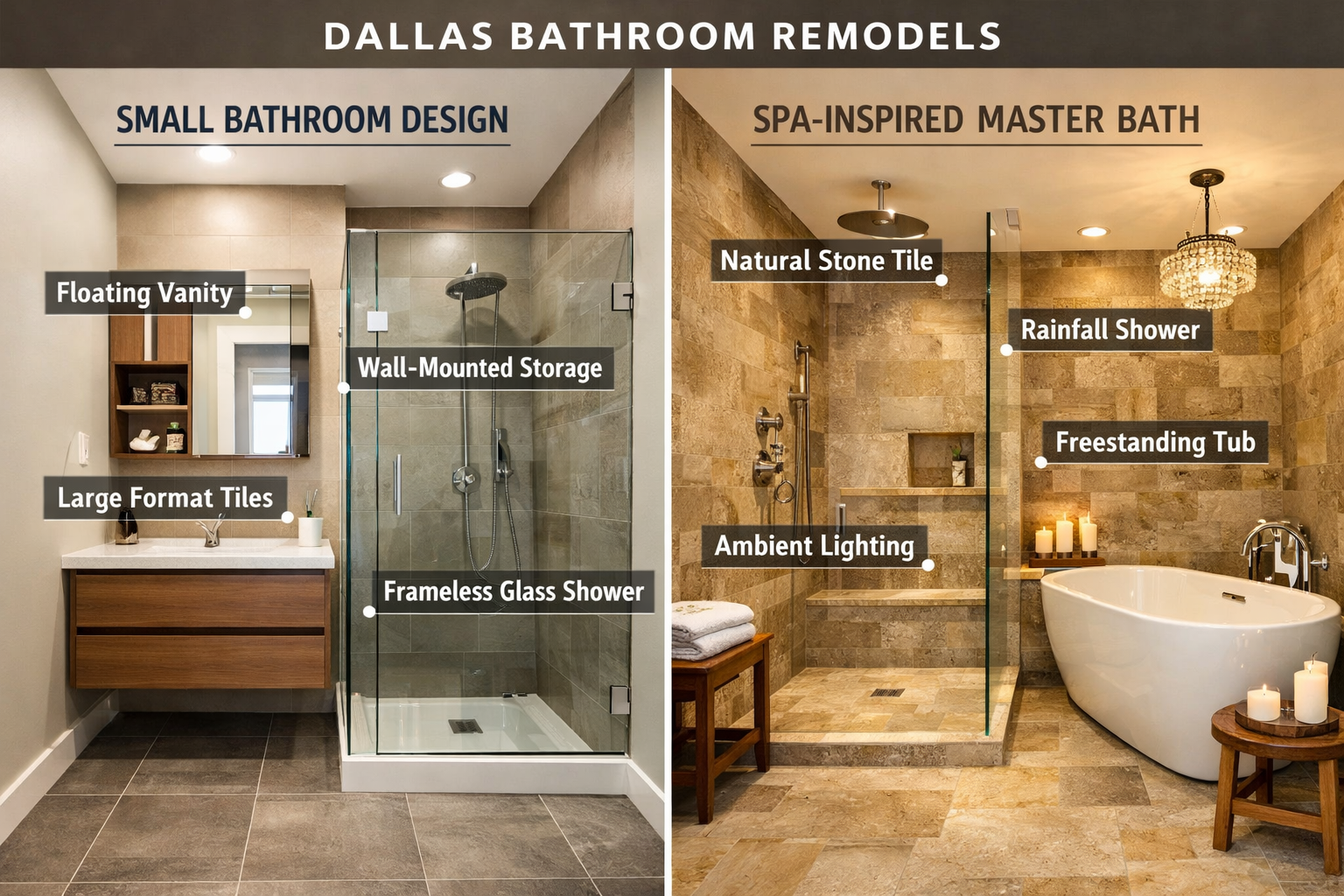
1. Floating vanities Wall-mounted vanities expose floor space underneath, which tricks the eye into perceiving a larger room. A 24-inch floating vanity with an integrated sink can replace a bulky pedestal or cabinet-base unit and free up visual breathing room.
2. Large-format floor tile Counterintuitively, larger tiles (24×24 or 12×24 formats) in small bathrooms reduce the number of grout lines, which creates a cleaner, more expansive look. Small mosaic tiles, while popular, can make tight spaces feel busier.
3. Frameless glass shower enclosures A frameless glass panel or fully frameless enclosure eliminates the visual barrier that a framed shower door or curtain creates. The eye travels through the glass rather than stopping at it.
4. Recessed niches and built-in storage Surface-mounted shelving and bulky shower caddies eat into already-limited space. Recessed niches cut into wall cavities keep toiletries organized without protruding into the room.
5. Vertical tile layouts Running subway tile or plank tile vertically rather than horizontally draws the eye upward, making ceilings feel taller.
6. Pocket doors or barn-style sliding doors Standard swing doors require clearance that small bathrooms can’t afford. A pocket door recessed into the wall or a barn door that slides along the exterior wall recovers that swing radius entirely.
Common mistake: Many homeowners in small bathroom renovations choose light colors thinking that’s the only way to open up space. Color actually matters less than layout, tile format, and fixture scale. A warm greige or soft sage can feel just as spacious as white if the other elements are right.
For homeowners considering whether a bathroom expansion is more practical than a redesign, reviewing room addition costs in Dallas may help clarify the cost-benefit comparison.
What Are the 15 Bathroom Remodel Ideas Worth Considering in Dallas?
Here’s the full list, organized roughly from structural changes to cosmetic upgrades. Not every idea belongs in every bathroom, but each one has proven relevant to DFW homeowners in 2026.
1. Curbless Shower Conversion
Eliminating the threshold between the shower floor and the main bathroom floor creates a modern, open look while also reducing tripping hazards. This upgrade requires proper waterproofing and linear drain installation, so it’s not a DIY project, but the result is worth the investment for most master baths.
2. Freestanding Soaking Tub
A freestanding tub positioned away from the wall becomes an immediate focal point. Oval and rectangular styles in matte white or stone resin are popular in Dallas right now. Pair it with a floor-mounted tub filler in brushed gold or matte black for a cohesive look.
3. Steam Shower Enclosure
Steam showers have moved from luxury-only territory into mid-range master bath renovations. A steam generator, properly sealed enclosure, and built-in bench seat are the core components. The ongoing maintenance is manageable, though it’s something to factor into the decision.
4. Rainfall Shower System with Body Jets
A ceiling-mounted rainfall head combined with wall-mounted body jets transforms a standard shower into something closer to a spa experience. These systems require adequate water pressure and a water heater with sufficient capacity, both worth verifying before committing.
5. Heated Tile Floors
Electric radiant mat systems installed beneath tile floors are increasingly standard in Dallas master bath remodels. Given that Dallas winters can dip into the 20s and 30s, stepping onto a warm floor at 6 a.m. is genuinely appreciated. The operating cost is modest when the system is thermostat-controlled.
6. Layered Lighting Design
This is perhaps the most underrated upgrade on this list. Most older Dallas bathrooms have a single overhead fixture and a basic vanity bar light. Replacing that with a combination of recessed ceiling lights, backlit mirrors or sconces flanking the vanity, and accent lighting in niches or under floating vanities creates a completely different atmosphere. LED systems save energy while giving homeowners control over warmth and brightness.
7. Double Vanity with Integrated Storage
For master bathrooms shared between two people, a double vanity with built-in drawer organizers, pull-out shelving, and a mix of open and closed storage solves the daily friction of shared space. Custom cabinetry in a warm wood tone or painted finish with quartz countertops is the most common configuration in Dallas right now.
8. Natural Stone or Stone-Look Tile
Full natural stone (travertine, marble, limestone) carries a premium price and requires sealing maintenance. Stone-look porcelain tile delivers a nearly identical visual result at lower cost and with far less upkeep. Both options are appearing frequently in Dallas bathroom renovations, and the choice often comes down to budget and how long the homeowner plans to stay in the home.
9. Tub-to-Shower Conversion
If a soaking tub sits unused in a secondary bathroom, converting that footprint to a walk-in shower is one of the highest-ROI moves available. The reclaimed space allows for a larger shower enclosure, built-in seating, and better storage. For families with young children, this is often the opposite calculation, so it depends on the household.
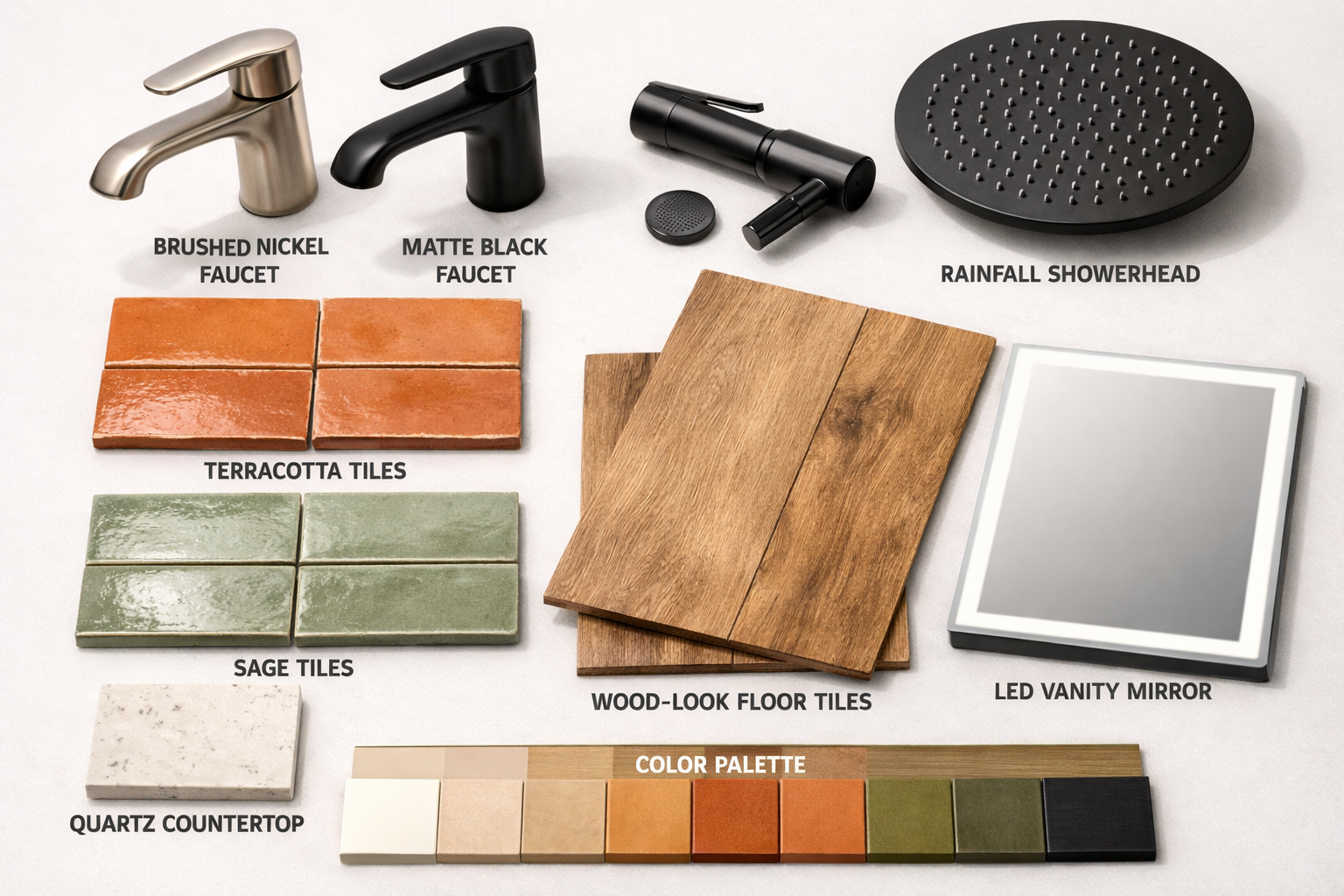
10. Matte Black or Brushed Gold Fixtures
Hardware finishes have a disproportionate impact on the overall feel of a bathroom. Swapping out chrome faucets, towel bars, and toilet paper holders for matte black or brushed gold creates visual cohesion without structural changes. This is one of the more budget-friendly updates on this list.
11. Smart Mirror with Integrated LED and Defogging
Backlit LED mirrors with built-in defogging, touch dimming, and sometimes Bluetooth speakers have become a standard feature in mid-range and above Dallas bathroom remodels. They serve a functional purpose while also contributing to the layered lighting strategy mentioned above.
12. Warm Neutral Color Palette
The all-white bathroom is fading. Warm whites, creamy off-whites, soft taupes, and earthy terracottas are replacing stark, cool-toned palettes across Dallas neighborhoods. These tones work particularly well with natural wood accents, brushed metal fixtures, and stone-look tile.
13. Built-in Shower Niche and Bench
A recessed niche eliminates the need for a shower caddy and keeps the visual lines clean. A built-in bench, whether tiled or with a teak insert, adds comfort and utility. Both features are worth planning during the framing stage rather than trying to add after the fact.
14. Wainscoting or Shiplap Accent Wall
For Dallas homeowners who want character without a full renovation, adding wainscoting or moisture-resistant shiplap to one wall introduces texture and visual interest. This works especially well in powder rooms and guest baths where a bold design moment is appropriate.
15. Accessibility-Forward Design
Grab bars, wider doorways, curbless showers, and comfort-height toilets aren’t just for aging-in-place planning. They make bathrooms more functional for everyone. Dallas homeowners in their 40s and 50s are increasingly incorporating these features proactively rather than reactively. For more on this topic, the guide on home accessibility upgrades for Dallas homes covers the full range of options.
What Materials and Fixtures Provide the Best Value for a Dallas Bathroom Upgrade?
Value in a bathroom remodel means different things depending on whether the goal is resale, personal enjoyment, or longevity. That said, some materials consistently outperform others across all three criteria in the Dallas market.
Best-value materials for Dallas bathroom renovations:
| Material | Best Use | Avg. Cost Range | Longevity |
|---|---|---|---|
| Porcelain tile (stone-look) | Floors, shower walls | $3-$8/sq ft | 20+ years |
| Quartz countertops | Vanity tops | $50-$120/sq ft installed | 15-25 years |
| Solid wood or plywood cabinetry | Vanity base | Varies widely | 15-30 years |
| Electric radiant mat (heated floor) | Under tile floors | $8-$15/sq ft installed | 15-20 years |
| Porcelain or vitreous china fixtures | Toilets, sinks | $150-$600+ | 20+ years |
Note: Cost ranges are estimates based on typical Dallas contractor pricing in 2026 and will vary based on scope, supplier, and labor rates.
Fixtures that tend to hold up best in Dallas’s climate include brushed metal finishes (which resist the mineral deposits common in DFW’s hard water better than polished chrome) and solid brass or stainless steel internal components in faucets and showerheads.
One thing worth mentioning: flooring choice matters a lot in Texas bathrooms. The combination of humidity, temperature swings, and hard water means that materials need to be genuinely moisture-resistant, not just moisture-tolerant. For a deeper look at flooring options across different home areas, the flooring guide for Fort Worth and DFW homes covers material performance in the local climate.
How Do You Choose the Right Color Scheme and Lighting for a Bathroom Remodel?
Color and lighting work together more than most homeowners realize. A color that looks warm and inviting under natural light can appear flat or even slightly green under the wrong bulb temperature. Getting both right is less about following trends and more about understanding how they interact in a specific space.
Color selection guidance for Dallas bathrooms:
- North-facing bathrooms with limited natural light benefit from warmer tones (creamy whites, warm taupes) and bulbs in the 2700K-3000K range to compensate for cool, indirect light.
- South or east-facing bathrooms with strong morning light can handle cooler neutrals and slightly higher color temperatures (3000K-3500K) without feeling clinical.
- Small bathrooms don’t necessarily need to be white. A warm greige or soft clay tone with good lighting can feel just as open as a stark white room with poor lighting.
- Accent colors work best when introduced through textiles, plants, or a single tile feature wall rather than painted surfaces, which are harder to maintain in high-humidity environments.
Lighting layers to plan for:
- Ambient lighting: Recessed ceiling fixtures or a central pendant provide overall illumination.
- Task lighting: Sconces or a backlit mirror positioned at face height on either side of the vanity eliminate the shadows that overhead-only lighting creates.
- Accent lighting: Under-vanity LED strips, niche lighting, or a backlit mirror edge add depth and a sense of luxury without significant cost.
A common mistake in Dallas bathroom renovations is treating lighting as a finishing detail rather than a structural decision. Electrical rough-in for additional fixtures needs to happen during the remodel, not after tile is installed. Planning the lighting layout early saves significant rework costs.
What Does a Bathroom Remodel Cost in Dallas in 2026?
Dallas bathroom remodel costs vary considerably based on bathroom size, scope, material selections, and whether structural changes are involved. Here’s a realistic breakdown:
Estimated cost ranges for Dallas bathroom renovations (2026):
- Cosmetic refresh (fixtures, hardware, paint, lighting): $2,500 to $7,000
- Mid-range guest bath remodel (new tile, vanity, toilet, shower surround): $8,000 to $18,000
- Full master bath renovation (structural changes, custom tile, double vanity, soaking tub, walk-in shower): $20,000 to $45,000+
- Luxury master suite overhaul (steam shower, heated floors, custom cabinetry, smart features): $45,000 to $80,000+
These are estimates. Labor costs in Dallas have increased over the past few years, and material costs fluctuate with supply chain conditions. Getting three quotes from licensed Dallas-area contractors before committing to a budget is strongly recommended.
For a detailed look at what the remodeling process looks like from start to finish, the bathroom remodel timeline guide for Dallas and Fort Worth is a useful planning resource.
What Are the Most Cost-Effective Bathroom Renovation Strategies for 2026?
Not every bathroom upgrade requires a full gut renovation. Several high-impact changes deliver strong visual results at a fraction of a complete remodel’s cost.
High-ROI, lower-cost bathroom remodel ideas:
- Reglazing existing tile or tub: A professional reglaze can refresh dated tile or a worn tub surface for $300 to $700, buying years before a full replacement is necessary.
- Replacing the vanity and countertop: Swapping a builder-grade vanity for a furniture-style unit with a quartz top is one of the fastest visual upgrades available, often achievable for $800 to $2,500 including installation.
- Upgrading fixtures and hardware: New faucets, towel bars, toilet paper holders, and a showerhead in a coordinated finish can be done for under $500 and dramatically changes the room’s feel.
- Installing a new toilet: Modern toilets with dual-flush mechanisms, elongated bowls, and soft-close seats are more efficient and more comfortable. A quality unit with installation runs $300 to $700.
- Adding a frameless mirror or LED mirror: Replacing a basic builder mirror with a framed or backlit option costs $150 to $600 and has an outsized visual impact.
Decision rule: If the existing tile, tub, and shower are structurally sound and not leaking, a cosmetic refresh targeting fixtures, lighting, and vanity will deliver 70-80% of the visual improvement of a full remodel at 20-30% of the cost. Reserve the full renovation for spaces with water damage, outdated plumbing, or layouts that genuinely don’t work.
If your bathroom has signs of water intrusion or moisture damage behind walls, addressing that first is non-negotiable. The Dallas water damage restoration guide covers what to look for and how to approach remediation before starting any cosmetic work.
How Do You Find the Right Contractor for a Dallas Bathroom Remodel?
Choosing a contractor is where many Dallas bathroom renovations succeed or fail. The DFW market has no shortage of remodeling companies, but quality and reliability vary significantly.
What to verify before hiring a Dallas bathroom remodeling contractor:
- Texas state license: Confirm the contractor holds a current license with the Texas Department of Licensing and Regulation (TDLR) for applicable trades.
- General liability and workers’ compensation insurance: Request certificates directly from the insurer, not just from the contractor.
- Permit history: A reputable contractor will pull permits for work that requires them. If a contractor suggests skipping permits to save money, that’s a red flag.
- Local references: Ask for references from projects completed in Dallas or surrounding areas within the last 12-18 months. DFW-specific experience matters for code familiarity and supplier relationships.
- Detailed written contract: Scope of work, material specifications, payment schedule, and project timeline should all be in writing before work begins.
The ALC Construction bathroom remodeling services in Dallas page is a good starting point for homeowners in the DFW area looking for a licensed, experienced local team.
For homeowners in specific DFW suburbs, service area pages for Plano, Frisco, and McKinney can help identify whether a contractor serves your specific location.
FAQ: Bathroom Remodel Ideas for Dallas Homeowners
Q: How long does a typical bathroom remodel take in Dallas? A mid-range bathroom remodel in Dallas generally takes 3 to 6 weeks from demolition to completion, assuming materials are ordered in advance and no unexpected structural issues arise. A full master bath renovation with custom tile work can run 6 to 10 weeks.
Q: Do I need a permit for a bathroom remodel in Dallas? Yes, in most cases. Structural changes, plumbing relocations, and electrical upgrades require permits from the City of Dallas or the relevant municipality. Cosmetic updates like painting, fixture swaps, and vanity replacements typically don’t. Your contractor should handle permit applications.
Q: What’s the best flooring for a Dallas bathroom? Porcelain tile is the most practical choice for most Dallas bathrooms. It handles humidity, temperature changes, and hard water better than most alternatives. Large-format porcelain in a stone or wood look is the most popular option in 2026.
Q: Is a soaking tub worth adding if I rarely use it? Probably not. If the existing tub goes largely unused, converting that footprint to a walk-in shower typically adds more daily value and can improve resale appeal in markets where buyers prioritize shower space. The exception is if the home has only one bathtub and families with young children are a likely buyer demographic.
Q: What’s the most popular bathroom color in Dallas right now? Warm neutrals dominate in 2026: creamy whites, warm taupes, soft greiges, and earthy terracottas. Sage green is also appearing frequently as an accent color. Stark cool whites and gray-dominant palettes are declining.
Q: How do I make a bathroom feel more luxurious without spending a lot? Focus on lighting first. Adding sconces flanking the vanity, upgrading to a backlit mirror, and switching to warm-toned LED bulbs delivers a significant atmosphere change for under $500. Coordinating all metal finishes to a single tone (all brushed nickel or all matte black) is the next most impactful low-cost move.
Q: What’s the ROI on a bathroom remodel in Dallas? ROI varies by scope and neighborhood. A mid-range bathroom remodel in Dallas typically returns 60-70% of the investment in added home value at resale, based on general industry estimates. Upscale renovations tend to return a lower percentage but may be justified by personal enjoyment and market positioning.
Q: Can I remodel a bathroom in phases to manage costs? Yes, and it’s a reasonable approach. Many Dallas homeowners start with plumbing and tile (the most disruptive work), then add fixtures and vanity in a second phase, and finish with lighting and accessories. Planning all phases together upfront avoids having to redo work later.
Q: What smart bathroom features are worth the investment? Heated tile floors and a programmable LED mirror offer the best daily-use value relative to cost. Digital shower controls and smart toilets are appealing but add complexity and maintenance considerations. Motion-activated lighting in secondary bathrooms is a practical, low-cost smart upgrade.
Q: How do I know if my bathroom needs structural work before a cosmetic remodel? Signs to look for: soft or spongy flooring near the tub or toilet, wall tile that sounds hollow or feels loose, visible mold on grout or caulk lines, musty odors that persist after cleaning, and any history of leaks from the floor above. If any of these are present, a contractor should assess the subfloor and wall cavity before cosmetic work begins.
Conclusion: Taking the Next Step on Your Dallas Bathroom Renovation
The bathroom remodel ideas covered here range from weekend-scale cosmetic updates to multi-week structural overhauls. What they share is a focus on what’s actually working in Dallas homes in 2026: natural materials, wellness-oriented design, smart technology where it adds genuine daily value, and layouts that make the most of available space.
A few practical next steps worth considering:
- Identify your primary goal. Is this about resale value, daily comfort, accessibility, or all three? That shapes which ideas deserve priority.
- Set a realistic budget before getting quotes. Contractors can work within a defined budget more effectively than they can reverse-engineer a project to fit a budget discovered after the fact.
- Get at least three written quotes from licensed Dallas-area contractors. Scope, materials, and timeline should be specified in each proposal for fair comparison.
- Plan for the unexpected. Most Dallas bathroom renovations encounter at least one surprise behind the walls, whether it’s outdated plumbing, inadequate waterproofing, or subfloor moisture. A 10-15% contingency buffer is a reasonable precaution.
- Start with a consultation. Many Dallas remodeling companies offer free or low-cost design consultations that can help clarify scope and cost before any commitment is made.
For homeowners ready to move forward, the ALC Construction remodeling services in Dallas and Fort Worth page is a practical starting point for finding a licensed local team familiar with DFW building requirements and design trends.




